Pokies availability depends on each venue’s current schedule, while broad searches may not verify specific locations or gaming-area hours.
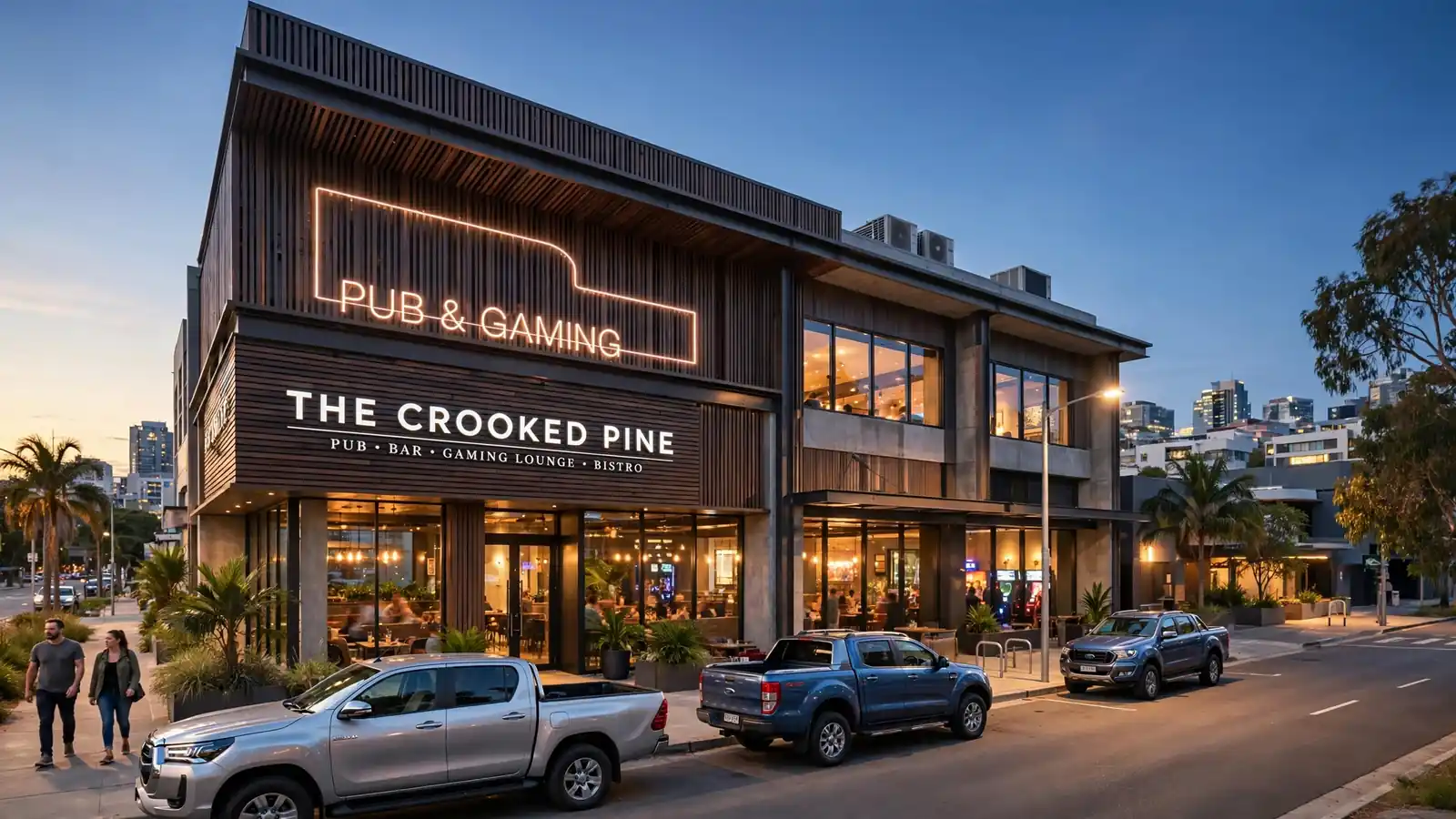
“Open” sounds like a simple condition: doors unlocked, lights on, business under way. For pokies, it is less tidy. A venue’s general trading hours do not necessarily answer whether its gaming area is operating, and a timetable from an earlier visit cannot establish what is happening now. There is no single citywide opening time that settles whether Brisbane pokies are open at this moment. The answer belongs to each venue and its current schedule.
That distinction matters most when plans depend on a particular part of the day. Someone looking for an early start, a late visit or a place open now needs current information for the venue in question—not a general impression of Brisbane nightlife. A listing can be useful as a starting point, but the date on which it was checked matters. Opening details can change, and a result that once described ordinary hours may not describe today.
The phrase “open now” is especially perishable. It asks for a live condition, not a permanent feature. A page that gives regular hours may not reflect a temporary change; a general venue timetable may also leave unclear whether pokies are available throughout those hours. Treating these as separate questions avoids a small but consequential confusion: whether the venue is open, and whether the gaming machines are operating.
Choosing pokies for Brisbane play in 2026 means weighing the details that are available before deciding where to play. This list offers a concise reference to each operator’s stated licensing, deposit or payout information.
JustCasino
JustCasino is listed with a Curacao Gaming Control Board licence.
Neospin
Neospin’s stated licence is Curacao Gaming Control Board OGL/2023/176/0095, held by Hollycorn N.V.
Thor Casino
Thor Casino is listed under a Curacao licence from Antillephone N.V. for Versus Odds B.V. Its minimum deposit is EUR 20.
MrPacho
MrPacho lists a minimum deposit of A$30. Its stated payout windows are 30–120 minutes for crypto and 24–72 hours for fiat.
JeetCity Casino
JeetCity Casino is listed with a Curacao eGaming licence held by Dama N.V.
DragonSlots Casino
DragonSlots Casino is listed with a Curacao Gaming Authority licence held by Jumpman Gaming Ltd.
Uptown Pokies
Uptown Pokies is listed as operating since 2017 under a Curacao licence. Its minimum deposit is A$20.
Playfina Casino
Playfina Casino is listed with a Curacao eGaming licence held by Hollycorn N.V. and has been operating since 2017. Its minimum deposit is A$20–30, depending on the offer.
Ricky Casino
Ricky Casino lists a minimum deposit of A$20, or A$30 to qualify for the bonus. Stated payout times are under an hour for crypto and 1–3 business days for PayID.
WinSpirit Casino
WinSpirit Casino is listed with Curacao eGaming licence OGL/2024/923/0383, issued by Antillephone N.V. Its minimum deposit is A$30.
A direct check with the venue is the clearest way to settle a same-day plan. Its own current information can distinguish ordinary trading hours from any change affecting that visit. If the timing is important, confirmation close to departure is more useful than relying on a remembered schedule or a listing with no clear update date. This is not a special Brisbane custom. It is the ordinary difference between a published timetable and the present tense.
Searches for pokies open early in Brisbane, or for a late session, often compress several assumptions into a few words. They imply that a venue exists, that its machines operate at the desired time and that the information is current. Those are separate matters. A city name cannot do the work of a venue-specific timetable, and an opening time alone may not establish the operating hours of the gaming area.
The same caution applies to questions about whether pokies are available at a particular morning hour. A time typed into a search box is not evidence that a venue opens then. Nor does a venue’s general reputation for long trading hours establish machine availability at every point in the day. The details need to be checked against the particular place and date. A clock is precise; a stale listing is not.
There is also a difference between published hours and a live confirmation. Published hours describe what a venue expects under its stated schedule. A current confirmation addresses whether that schedule applies on the day. For a casual outing, the distinction may feel fussy. For a trip made specifically to play pokies, it is the whole point.
The question can be put plainly: are Brisbane pokies open now? Not as a citywide proposition. Some venue’s own current schedule would be needed to answer for that venue, and the wording “Brisbane pokies” cannot supply it. The same applies to a request for opening times generally: without a named venue and a date, a single answer would suggest a consistency that the question does not establish.
Opening hours also should not be mistaken for a promise about results. A venue’s timetable says when it operates; it does not tell anyone what a pokie will return. Each spin is an independent random event determined by a Random Number Generator. A session’s timing has no bearing on the next outcome, and a venue being open does not make a payout more likely. That is a separate question from whether the doors are open.
The practical habit is modest: identify the venue, check its current timetable, and confirm that the gaming area is operating at the intended time. If those details cannot be established, the honest answer to “open now” remains unresolved—not because Brisbane has one mysterious schedule, but because the question depends on a particular venue’s present arrangements.
Hours are local facts. Verify them close to the visit.
The phrase “best pokies in Brisbane” can point towards two very different things: machines encountered in a physical venue, or casino-style games offered through a screen. They may look similar in a list of titles or a promotional image, but the setting changes the legal question. A Brisbane venue and an online casino are not interchangeable versions of the same arrangement.
Physical pokies belong to the world of licensed venues and machines operated on site. Online casino games sit under a different national rule. The Interactive Gambling Act 2001 prohibits companies from providing real-money online casino games to people in Australia, and no Australian-licensed online casino exists. The distinction is easy to blur when a screen uses the same familiar language as a venue. Legally, the screen is not a lounge.
That matters for searches about Brisbane casino pokies, including those focused on the CBD. A place-based phrase can create the impression that an online service is simply a local venue in digital form. It is not. The fact that an operator accepts Australian customers, or that a game can be opened from Brisbane, does not create an Australian casino licence. Nor does the name of a city turn an online product into a local establishment.
Questions about “best-paying” pokies raise a separate problem: what does “paying” mean? A return-to-player figure, or RTP, is a statistical measure of the share of wagers a game is designed to return over a very large number of plays. It is not a forecast for one person’s session, a promise of a particular result, or a timetable for a win. A high figure, where one is stated, cannot tell anyone what the next spin will do.
Even a published RTP may not settle comparisons between venues. A specialist review has reported that some providers allow casinos to choose between different RTP settings for the same pokie. If that arrangement applies, the game’s name alone would not establish its return setting at a particular casino. The relevant figure would need to be tied to that version and that venue, rather than treated as a permanent property of the title.
This is a small but consequential distinction. A machine’s reputation can travel further than its configuration. A familiar name may suggest that the experience is identical wherever it appears, while the return setting may vary. Without information connecting a stated RTP to the specific machine, a comparison of “best pokies in Brisbane” cannot be made reliably on game name alone.
And no RTP converts chance into a schedule. Each pokie spin is an independent event generated by a Random Number Generator. Previous spins do not make a particular result due, and a run of wins does not establish that another is coming. The arithmetic describes long-run behaviour; it does not read the room.
That independence is often at odds with the stories people tell about machines. A hot streak seems to have a character; a losing run seems to be building towards correction. Such interpretations are human and old-fashioned in the most ordinary sense: people look for intention in sequences. The machine supplies numbers, not a memory of what happened before.
So the word “best” needs a careful boundary. For physical pokies in Brisbane or the city centre, it might refer to a venue, a machine, its published return, or simply a player’s experience. Those are not the same measure. For an online casino, the more basic issue comes first: real-money online casino services are prohibited for operators in Australia, and there is no domestic online casino licence to distinguish one as locally authorised.
Legal Status
The Interactive Gambling Act 2001 prohibits the provision of real-money online casino games to people in Australia, and no Australian-licensed online casino exists.
The result is not a neat ranking of local and online alternatives. It is a separation between physical gaming and an online market that Australian law does not license. Familiar terminology conceals that divide; it does not remove it.
A screen can make distance seem irrelevant. A person in Brisbane may encounter a website presenting online pokies as though they were simply another local entertainment option. But the law does not turn on the address printed on a page or the city named in a search. It turns on where the customer is: the Interactive Gambling Act 2001 prohibits operators from providing real-money online casino games, including pokies, to people in Australia.
No Australian licence has been issued for an online casino. That leaves no licensed domestic online-pokies market behind the familiar language of “Brisbane casino” or “cashless play”. A payment button cannot supply the licence the law requires, and a site’s willingness to accept Australian customers is not evidence that its service is lawful here.
The distinction matters because the law’s target is the operator, not the individual player. Australians are not criminally liable simply for playing on an offshore site that accepts them. That is a narrow reassurance, not a consumer guarantee: if an offshore casino refuses to pay winnings, the player has no legal recourse in Australia. Permission to play and a practical way to enforce a claim are different things.
“Cashless” describes how money moves, not what kind of service is being purchased. A transfer through a bank-linked method such as PayID does not change an online casino’s legal status, certify its games, or create a local authority to resolve a dispute. The payment route and the gambling service are separate questions.
That distinction can get blurred by the polished routine of a digital transaction. Deposits and account screens may make an offshore operation feel as ordinary as any other online purchase. Yet a completed transfer does not establish that the operator is licensed in Australia, and the absence of cash does not remove the risk of being left without an effective local remedy. Convenience is not jurisdiction.
For people searching for online pokies near Brisbane, the geographical language can also mislead. A website may be reachable from a Brisbane address, but that does not make it a Brisbane venue or a locally regulated service. The same national rules apply whether a page invokes the city centre, another Queensland suburb or a different Australian city. Location in a search phrase cannot confer local status.
The Australian Communications and Media Authority enforces the Interactive Gambling Act and blocks access to illegal offshore gambling sites. Internet service providers must comply with its blocklist. A site appearing in search results, or remaining accessible at a particular moment, therefore should not be mistaken for an endorsement or assurance of lawful provision. Access and legality are not synonyms.
Attention If an offshore casino refuses to pay winnings, the player has no legal recourse in Australia.
BetStop has a similarly important boundary: it applies to Australian-licensed operators and does not bind offshore sites. It cannot turn an offshore account into a protected one or ensure that an exclusion request will be honoured there. A safeguard with a defined jurisdiction cannot be assumed to travel across it.
The appeal of a “best paying” or high-limit option is easy to understand: numbers suggest something measurable, and cashless systems suggest a frictionless path. But neither wording answers the prior question of whether the service may lawfully be offered in Australia. Nor does it repair the central weakness of offshore play: when a payment or winnings dispute arises, Australian players have no local legal recourse against the casino.
The law draws a line around the provider; the practical risk falls close to the player. That is the limit.
A venue’s machines are not merely furniture in a club or hotel; they bring obligations that sit behind the ordinary business of serving patrons. For Brisbane venues, that distinction matters more than any informal label such as “best”. A room may look like a leisure amenity, but the rules treat machine operation as something requiring staff attention and records, particularly where gambling harm becomes visible.
A report by regionriverina.com.au says that, from 1 July, venues operating more than 20 gaming machines are required to have a dedicated responsible gambling officer (RGO) on duty whenever those machines are running. The role is not simply a name on a roster: the point is to have a designated person present while play is taking place. That links the venue’s operating schedule to an active responsibility, rather than leaving concern about a patron’s behaviour to chance or to whichever staff member happens to notice.
The same report describes a transition period of one month for venues to remove signage and put the RGO arrangement in place. That interval is presented as time to make the change, not as a permanent exemption. It also describes a requirement for venues to maintain a gambling incident register. The register is intended to capture events, including occasions when a patron’s behaviour suggests they may be at risk of gambling harm or already affected by it.
Paperwork has a particular social function here. It turns an encounter that might otherwise be treated as an awkward interruption into something the venue is expected to recognise and record. The record does not by itself prevent harm, and an officer’s presence cannot make a machine harmless. But both measures make responsibility harder to pass along as nobody’s job.
For anyone comparing Brisbane pokies venues, these rules offer a more grounded way to think about the setting than a claim that one room is “best”. A venue’s public image and its obligations are not the same thing. The latter concern what happens while machines are operating: who is assigned to the responsible-gambling role, and whether incidents are documented when warning signs appear. A promotional description cannot answer those questions.
The report’s stated requirements are tied to the machine threshold and the period when machines are in operation. They should not be mistaken for a complete account of every rule that may apply to a particular club, hotel or other venue. Nor do they establish that any specific Brisbane premises meets the requirements. They do, however, show the direction of the obligation: machine operation brings oversight, and signs of harm are meant to leave a record.
Responsible Gambling
Venues operating more than 20 gaming machines are required to have a dedicated responsible gambling officer (RGO) on duty whenever those machines are running.
Not just décor.
A deposit is only the first part of the transaction. For someone weighing Brisbane pokies or a real-money offer, the more revealing question is what happens between money going in and any winnings coming out. A bonus can make that path longer, while a bank’s payment decision may interrupt it before play begins.
PayID works through Australia’s New Payments Platform, but that does not guarantee a transfer to a gambling merchant. A specialist review reports that some Australian banks, including members of the Big Four, occasionally block PayID payments to merchants they identify as gambling-related. The detail matters: a transfer method can function normally for everyday payments and still fail in this context. PayID is not evidence that an operator is licensed or that its games disclose a particular return.
Bonus language has its own arithmetic. A wagering requirement is the amount that must be bet before winnings attached to an offer can be withdrawn. A specialist review recommends treating 35x or less as a comparatively manageable threshold and describes requirements above 40x as punishing; those are the review’s judgements, not a universal rule. The calculation also depends on what the multiplier applies to. At 40x on a $500 bonus, the stated turnover is $20,000. If a 35x requirement applies to a $500 deposit plus a $500 bonus, the turnover becomes $35,000. The headline figure is not the whole cost. The fine print decides the base.
“Free” spins can have a cash-out ceiling, according to the same kind of specialist review. That means a win may not translate into an equivalent withdrawal. The practical value of an offer therefore depends less on its bright front-page number than on its qualifying bets, expiry conditions and any limit on winnings. A bonus can be generous in typography.
Withdrawal rules create a separate bottleneck. A specialist review reports that some casinos set weekly or monthly withdrawal caps between $5,000 and $10,000. Under such a cap, a $50,000 jackpot could be paid in stages over years rather than arriving as one sum. This is a reported condition at some operators, not a standard that can be assumed across the market. A large balance and accessible cash are not the same thing.
Identity checks can also stand between a balance and a payout. Before a first withdrawal, casinos may require documents establishing identity and address; the review describes requests for images of identification, proof of address and, in some cases, a selfie holding the identification. These checks are part of the withdrawal process, not a guarantee that payment will follow. Offshore operators are outside Australia’s domestic licensing system, and a player has no Australian legal remedy if one refuses to pay.
The offer and the payment route belong in the same calculation. Deposit friction, turnover terms, withdrawal limits and document demands all shape what “getting money back” means. The number on the banner is the least complicated part.
“Near Brisbane Airport” sounds precise until the word *near* has to do real work. It might mean inside the terminal, somewhere in the airport precinct, or a venue reached after leaving the airport area. Those are different claims, not interchangeable descriptions. A place can be associated with the airport without being inside it; a venue elsewhere in Brisbane does not become an airport venue simply because the city name fits.
That distinction matters for pokies. The airport itself is not evidence that pokies are available there, and a general Brisbane result does not establish that a venue is close to the terminal. Naming a club or hotel on that basis would turn a geographic hunch into a recommendation.
The phrase “near me” is even less fixed. Its meaning shifts with the point from which a person is measuring: the terminal, an airport car park, a nearby workplace or somewhere else in the city. A result described as close may still involve a separate journey. Without an identified venue and a clear starting point, distance language offers atmosphere rather than useful geography.
The same caution applies to requests for pokies at Brisbane Airport itself. An airport is a transport setting, not a guarantee that every kind of entertainment or venue is present. A search phrase can imply a location; it cannot prove one. The difference is small in wording and substantial in consequence.
There is also a familiar blur between Brisbane and similarly named places elsewhere. A result that uses “Brisbane” loosely, or refers to another location with a similar name, should not be treated as evidence about the airport area. Place names are convenient containers for search results. They are not always careful maps.
So the honest answer is narrow: the existence of a Brisbane Airport search does not establish a nearby pokie venue, its address, or how far away it might be. A useful local answer would need to be tied to a named place and a defined area, rather than inferred from the city label. Until then, airport proximity remains unconfirmed.
That is not a small distinction. In local listings, the difference between “in Brisbane” and “at the airport” can be the whole journey.
“Open all night” sounds like a simple property of a place. In practice, it is a claim about a particular venue, on a particular date, and sometimes about a particular part of that venue. A Brisbane-wide description cannot establish that every pokie room keeps the same hours, or that any one of them is operating now.
That distinction matters when the wording is more urgent than the information behind it. A search for a 24-hour venue may be asking whether a door is open at this moment, not whether a business has ever advertised late trading. Those are different questions. A schedule can change; a general label may not say whether it refers to the whole premises or the area containing the machines.
For Brisbane pokies opening hours, the useful unit of information is therefore the named venue’s own current schedule. Without that, “24-hour pokies” is not a dependable description of a place to go. It is an assertion waiting for a source.
There is a small social history in the phrase. Round-the-clock service belongs to a culture that treats availability as evidence of convenience: if a service exists, it should be there whenever someone wants it. But opening hours are not an abstract feature of the city. They are a decision made by an operator, within the conditions applying to that venue. A broad label cannot make that decision on its behalf.
Nor does “open now” settle the matter by itself. The phrase loses its meaning as soon as the day or the venue changes. A useful answer has to connect the time to the place, rather than allowing a city-level result to stand in for both. That is less dramatic than a promise of uninterrupted access. It is also more honest.
For anyone comparing 24-hour pokies venues in Brisbane, the distinction is between a general claim and a confirmed schedule for a named location. No city-wide inference can fill that gap. A venue-specific answer should make clear what hours apply and when they were checked; otherwise, it cannot establish that the machines are available at the time in question.
The phrase may be convenient. The clock is less so.
South Brisbane, South Bank and Brisbane’s northern suburbs often appear in the same hunt for a nearby pokie venue. They are not interchangeable locations, though, and a place name alone cannot establish which venues have machines, how many they have or what a particular machine may pay. A neighbourhood label is a starting point, not a directory.
That distinction matters because local search results can make proximity look more certain than it is. “South Bank” may be used loosely for nearby parts of South Brisbane; “north Brisbane” can cover a broad sweep of suburbs. Without confirmed venue details, naming a club or attaching a machine count to any of these areas would turn geography into guesswork.
The same caution applies to searches for pokies in South Brisbane or around South Bank. The names identify the intended part of the city, but they do not establish a particular venue’s facilities. Nor do they show that a venue is open, or that it has a machine available. Those are separate questions, answered at the venue level rather than by the neighbourhood name.
Northside searches have the same problem in reverse: the area is expansive, while a useful answer would need to be specific. A city-side label cannot stand in for a confirmed address or evidence about machines on site. There is no reliable shortcut from “north” to a particular room of flashing lights.
The phrase “maximum cash payout” also asks for a different kind of information. It suggests a fixed ceiling that could be applied across Brisbane, but no neighbourhood-wide maximum can responsibly be stated. A location does not itself determine a machine’s payout, and no confirmed local figure supports a comparison between South Brisbane, South Bank and the north.
The word “maximum” has a reassuring neatness. Gambling rarely does.
A careful local account would need to distinguish a venue’s own information from a city-wide claim, and a machine’s stated terms from a general promise about what can be collected. Without those details, a payout figure would be false precision, not useful local knowledge.
These areas remain meaningful search locations; they simply do not, by themselves, prove that a particular pokie venue or payout is available there. Brisbane’s neighbourhoods are real. A neighbourhood-level machine map is another matter.
A club in Brisbane’s central business district is a social category, not proof of a particular gaming room or machine offering. The words “CBD club” can suggest a familiar arrangement—dining, bars, members’ facilities and pokies under one roof—but that picture cannot stand in for venue-specific details. No list of CBD clubs or machine counts can be responsibly inferred from the label alone.
That matters because “best” has little meaning without a defined measure. A venue’s location says nothing by itself about how its machines operate, what safeguards are available, or whether its atmosphere suits a particular person. A ranked list would turn a place-name into a recommendation without establishing the grounds for one.
The more useful question is what protections look like around play. Deposit limits can restrict money put into an account; loss limits can set a boundary on losses; session time limits can interrupt extended play. Self-exclusion is another tool, intended to prevent access for someone who chooses to step away. These measures are not interchangeable: one concerns deposits, another losses, another time, while exclusion addresses access itself.
They also do not make gambling harmless. A limit is a boundary, not a prediction of what will happen, and the practical meaning of a tool depends on where it applies. Responsible-gambling measures are part of the context around pokies, not a badge that makes a venue or form of play suitable for everyone.
In Australia, the legal age for gambling, including online pokies, is eighteen. That rule establishes an age threshold; it does not settle questions about venue quality or personal risk. The distinction is plain. The consequences are not always so.
For anyone considering self-exclusion, the central detail is its scope: whether the arrangement applies to the place or service in question and how access is restricted. A general mention of self-exclusion does not identify a CBD club, confirm that it participates in a particular scheme, or establish the terms available there. Those details belong to the specific venue or service, not to the neighbourhood label.
Brisbane’s central clubs may attract interest for many reasons, but location alone cannot tell a story about machine safeguards. The responsible account keeps those questions separate: a district is geography; limits and exclusion are tools; neither is a recommendation.
“Crown Brisbane” reads like a place name, and adding pokies makes it sound like a specific gaming room. But a brand and a city placed side by side do not establish that a venue operates there. Nor does the wording establish that a particular room, machine selection or set of facilities exists.
That distinction matters because venue descriptions can acquire a life of their own. A page may repeat a name, another may borrow the description, and repetition can begin to resemble confirmation. It is not confirmation. A reliable account of a Brisbane venue would need to identify the place and support the claims made about it; the name alone cannot do that.
The same restraint applies to “best pokies room” language. “Best” depends on what is being compared: the atmosphere, access, facilities, machine choice or something else. Without a clearly identified venue and evidence for the comparison, the phrase is a judgement dressed as a fact. No particular Crown pokies room in Brisbane can responsibly be described or ranked on that basis.
There is also a difference between a casino brand and the legal setting for online play. Under the Interactive Gambling Act 2001, companies cannot provide real-money online casino games to people in Australia. That rule concerns online services; it does not verify the presence, location or features of a physical Brisbane venue. The two meanings should not be folded together merely because the same casino language appears in both.
Names can travel more easily than addresses. A careful description keeps them separate: a Crown-branded Brisbane venue is not established merely by the way a phrase is written, and no particular pokies room should be attributed to it without a sound basis. Branding is not a map.
There is no Australian-licensed online casino, and Australian players have no legal recourse in Australia if an offshore casino refuses to pay winnings. ACMA blocks access to illegal offshore gambling sites, but that does not provide Australian regulatory protection for players who use them.
Each spin is an independent random event determined by a Random Number Generator. The same game can have different RTP settings at different casinos, so check the stated RTP; it does not predict the result of an individual spin.
Compare the wagering requirement with the bonus and the amount you must bet before withdrawing. For example, a $500 bonus with a 40x requirement means $20,000 in bets; if the requirement applies to a $500 deposit plus a $500 bonus at 35x, it means $35,000 in bets. Also check for free-spin cashout caps and withdrawal limits.
You must be at least 18 years old to gamble in Australia, including on online pokies.
Australian law prohibits companies from offering real-money online pokies to Australians without a domestic licence, and no such licences have been issued. The law targets operators rather than individual players, but Australians using offshore sites have no legal recourse in Australia if a site refuses to pay.