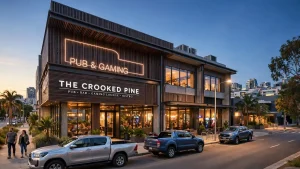
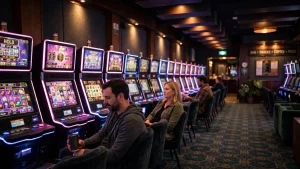
Major casinos operate around the clock, while entry and access to different areas depend on the venue’s rules and conditions.
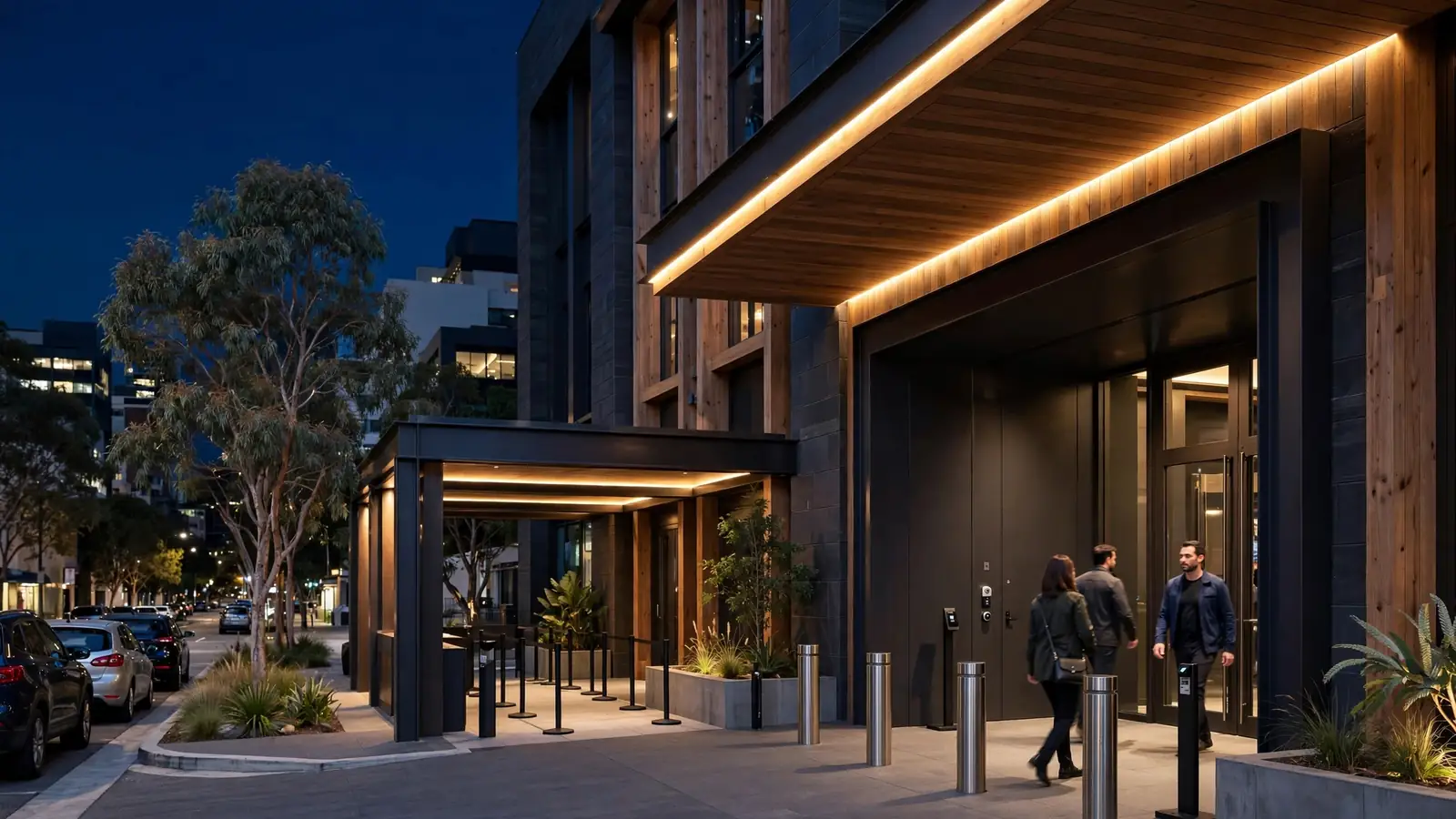
“Open now” sounds like a small question with a small answer. In Australia, for a major casino, the broad operating-hours answer is unusually simple: major casinos run around the clock. But a building’s hours and a person’s ability to enter are not quite the same thing. The first describes the venue’s general operation; the second depends on who is arriving and the conditions of entry.
That distinction matters because a casino is not a single, undifferentiated room. It is a large venue with its own rules and access arrangements. A listing that says a casino is open does not, by itself, establish that every part of the property is accessible in the same way, or that every visitor can walk in. “Open” is a useful starting point, not a universal pass.
The national baseline is clear on age: casino entry is restricted to adults, with a minimum age of 18. This applies across Australia. The rule draws a bright line around the gaming floor, even though a casino property may contain other spaces and services. A venue’s operating status cannot make someone underage eligible for entry to the casino.
Looking for pokies open near you in Australia in 2026? Use this list as a starting point to check each site's available details and decide what suits your needs.
JustCasino
JustCasino is listed with a Curaçao Gaming Control Board licence.
Neospin
Neospin is listed with Curaçao Gaming Control Board licence OGL/2023/176/0095, held by Hollycorn N.V.
Thor Casino
Thor Casino is listed with a Curaçao licence from Antillephone N.V. (Versus Odds B.V.). Its minimum deposit is EUR 20.
MrPacho
MrPacho lists a minimum deposit of A$30. Its stated payout times are 30–120 minutes for crypto and 24–72 hours for fiat.
JeetCity Casino
JeetCity Casino is listed with a Curaçao eGaming licence held by Dama N.V.
DragonSlots Casino
DragonSlots Casino is listed with a Curaçao Gaming Authority licence held by Jumpman Gaming Ltd.
Uptown Pokies
Uptown Pokies is listed as operating since 2017 under a Curaçao licence. Its minimum deposit is A$20.
Playfina Casino
Playfina Casino is listed with a Curaçao eGaming licence held by Hollycorn N.V. and has operated since 2017. Its minimum deposit is A$20–30, depending on the offer.
Ricky Casino
Ricky Casino lists a minimum deposit of A$20, or A$30 to qualify for the bonus. Its stated payout times are under an hour for crypto and 1–3 business days for PayID.
WinSpirit Casino
WinSpirit Casino is listed with Curaçao eGaming licence OGL/2024/923/0383 from Antillephone N.V. Its minimum deposit is A$30.
For major Australian casinos, valid photo identification is required for entry. In practical terms, that makes the question more than a glance at opening hours. A person may be at the door while the venue is operating, yet still be unable to enter if they cannot establish that they meet the entry requirements. The detail is mundane, but it is the kind that turns a general answer into a useful one.
The phrase “near me” adds another layer, although it does not change the meaning of “open.” A nearby result may identify a casino in the same city or region; it does not itself confirm whether that venue is suitable for a particular person or whether access to every part of it is available. Distance and operating hours answer different questions. One is about where a venue is; the other is about its general schedule.
This is why “open now” should be read as a statement about the casino’s broad operating pattern rather than a promise about every possible visit. The 24-hour operation of major Australian casinos supplies a strong general baseline. It does not erase entry rules. Nor does it turn a search result, map label or sign into a substitute for the venue’s own conditions.
The distinction also helps separate a casino from the wider idea of a gaming venue. A pub or other local venue may have its own opening schedule and access arrangements; the fact that major casinos operate continuously cannot be carried over to every place offering gambling. The words may be grouped together in a hurried search, but the businesses behind them are not interchangeable. A casino’s national operating pattern says nothing definitive about a pub nearby.
 Pokies Parlour Casino in Australia: Venue or Website?Australian casino licences attach to a particular property and jurisdiction; learn why parlour labels and online bonus claims prove neither.
 Aussie Pokies Online in Australia: Free Play and Real StakesExplore how free-play pokies differ from cash play, why random spins are not predictive, and what payment, bonus and download claims leave…
There is a social history in this neat division. The casino is treated as a place whose doors may remain open while the right to cross its threshold is bounded by age and identification. The clock is permissive; the admission rule is not. Australia’s approach makes the threshold more consequential than a simple sign reading “open” might suggest.
For someone asking whether any major casino is operating at the moment, the general answer is yes: major Australian casinos operate 24 hours a day. For someone asking whether a specific visit is possible, “open” has to be understood alongside the entry threshold and the venue’s access arrangements. These are not contradictory answers. They describe different parts of the same situation.
That is the useful reading of “open now” in this context. It speaks first to the broad hours of major casinos, not to unrestricted access for everyone, everywhere, or to every facility within a property. The national age minimum is 18, and valid photo ID is required at major casinos. The doors may be open. Entry remains conditional.
A request for a casino open at six or seven in the morning is often less about an opening ceremony than about whether the doors are still open after the night has thinned out. Across Australia, all major casinos operate around the clock. For those properties, dawn is not a scheduled restart: the casino has not closed overnight and reopened for the morning.
Major Australian casinos operate around the clock, meaning dawn is not a scheduled restart but a continuation of continuous operation.
That distinction matters when the wording shifts between arriving at six, arriving at seven, or finding somewhere open at eight. For a major casino, those are different arrival times within continuous operation, not separate opening slots. The clock may change the character of the visit, but it does not mark a daily opening hour.
The wording about staying open until five or six in the morning points to the same practical question from the other end of the night. At a major casino that operates 24 hours, five o’clock is not a closing time. Nor does six in the morning create a special boundary between a late-night session and a morning one. It is simply another point on the clock.
This can make a broad search for an open casino seem easier than it is. “Open” answers whether the property is operating; it does not establish which venue is nearby, or settle every detail of entry. Australian casinos are licensed by their state or territory, so the country-wide picture is shaped by local properties and their own arrangements. The national pattern is useful, but it is not a substitute for knowing which casino a particular journey concerns.
Morning has its own social geography. It belongs to commuters, hospitality workers finishing a shift, travellers arriving early, and those for whom the day has already begun while much of the city is still quiet. A casino open at dawn sits inside that ordinary timetable while also resisting it: its hours do not divide neatly into the working day and the night before. The building remains in operation as the surrounding streets change pace.
The familiar phrase “pokies near me” can conceal that difference. It may mean a nearby casino that is open at the time of arrival, rather than a machine room with a distinct morning opening. For major casinos, the continuous-hours fact answers the first part in broad terms. It does not identify the nearest property or make every location interchangeable. “Near” remains a matter of actual geography; “open” remains a matter of operating hours.
Entry is also a separate matter from the hour. Valid photo identification is required for entry to all major Australian casinos. The rule does not become less relevant at dawn, when a venue may feel less like a night-time destination and more like an extension of the city’s early shift. A quiet hour is still an hour of entry under the same basic condition.
The six- and seven-o’clock searches therefore do not reveal a special class of morning casino. They express a desire for certainty at a particular time. The broad answer is that major Australian casinos operate 24 hours a day, so an early arrival is not, by itself, outside their operating day. The more specific answer depends on the named property and its location.
Valid photo identification is required for entry to all major Australian casinos, regardless of the hour of arrival.
There is a small oddity in the way the clock is imagined here. A venue can be open all night, yet people still ask whether it is open at the point when night gives way to morning. The question is less a contradiction than a habit: daily life is organised around opening and closing times, so continuous operation needs to be asked about again at every hour. The building’s timetable is simpler than the city’s.
For searches that place the arrival at eight, the same distinction applies. The time is early for many public-facing routines, but not an opening threshold for a major casino operating continuously. A specific venue’s current entry information remains the appropriate way to establish its arrangements; the national statement describes major casinos as a group, not every property or every service within one.
Dawn, then, is not a separate operating category. It is the hour at which a night-long venue meets a waking city. The doors keep their own time.
A casino’s ordinary operating pattern and its arrangements for Good Friday are different questions. Major Australian casinos run around the clock, so a general description of their daily hours points to continuous operation rather than a conventional closing time. It does not, by itself, settle what happens at a particular property on a public holiday.
That distinction matters because “open today” can mean an ordinary weekday, a weekend, or a date when holiday arrangements apply. The calendar changes the question. A general statement about round-the-clock operation gives useful context, but it should not be turned into a promise that every venue follows an unchanged schedule on Good Friday.
The same caution applies to whether a casino is open tonight. If tonight falls on an ordinary day, the broad 24-hour pattern is relevant. If it falls on Good Friday, the date-specific arrangements become the central issue. Those are not interchangeable readings of the clock. The former describes the general operating model; the latter asks how a named venue handles a particular holiday.
Australia’s casino industry is regulated by state and territory, with each property operating under a licence from its jurisdiction. That local structure is one reason a national generalisation cannot answer every venue-level question. A schedule that applies to one property should not be assumed to apply everywhere, and a national account of major casinos’ hours does not amount to a holiday notice for each one.
Good Friday also carries a public meaning beyond a change in the calendar. In Australia, the day sits within a set of civic and religious observances that can alter the usual rhythms of work and commerce. Casinos, unlike many businesses with a single daily opening and closing, may operate continuously in ordinary circumstances; still, that feature does not erase the distinction between ordinary hours and holiday-specific arrangements. The calendar keeps its own authority.
For someone trying to establish whether a local casino is operating on Good Friday, the useful question is therefore not simply whether Australian casinos are generally open all day and night. It is whether that specific venue has announced an arrangement for that date. The general operating pattern can narrow the context, but it cannot fill in a property’s holiday details. A direct venue notice is more pertinent than an assumption drawn from ordinary daily hours.
There is no contradiction in saying both that major casinos operate 24 hours a day and that this fact alone cannot confirm a particular Good Friday schedule. One statement describes the broad pattern; the other marks its limit. Treating the first as a guarantee for every date would make a national summary do work it was not designed to do.
So an ordinary “open today” assessment and a Good Friday assessment should remain separate. On an ordinary day, continuous operation is the relevant general picture for major casinos. On Good Friday, the date calls for venue-specific confirmation. That is a modest distinction, but a useful one: operating hours are not a holiday timetable.
“Near me” has no fixed geography. It begins with the place from which someone is looking: a suburb, a town, an airport or a stretch of road. A venue that is close in one city may be irrelevant from another, and a broad Australian result cannot settle that local question. The useful comparison is between an actual starting point and an actual address.
That distinction matters because a name can suggest a city without revealing where the entrance sits within it. Lasseters Casino is at 93 Barrett Drive, Alice Springs, NT 0870. The street address places it in Alice Springs rather than merely attaching it to a regional label. Someone checking which venue is closest needs to compare that address with their own location, not rely on the word “nearby” in a listing.
The same principle applies on the coast. Jupiters Gold Coast Casino & Hotel is on Broadbeach Island, Gold Coast. “Gold Coast” covers a wider area than a single venue, so a search based only on the city name leaves out the detail that determines whether the property is nearby. Broadbeach Island is the more useful point of reference when judging proximity.
These two locations illustrate why results for a nearby gaming venue can change sharply with the starting point. In Alice Springs, the Barrett Drive address is meaningful; around the Gold Coast, Broadbeach Island is the relevant landmark. Neither address proves which venue is closest to a person elsewhere, and neither can answer a location-specific question such as whether there are pokies near Redcliffe. That would require a local comparison, not an assumption drawn from a state or city name.
Hours and distance are separate parts of the decision. A place can be geographically close without that fact alone establishing its current entry arrangements. Likewise, a venue described as open does not become the nearest one merely because its hours suit the moment. Searches for an early opening, a venue open today or somewhere that remains open late may combine two different needs: finding a location and confirming access. The address helps with the first; it should not be mistaken for an answer to the second.
This is especially clear when the wording is vague. “Closest” depends on the point measured from, while “nearby” can mean a walkable place to one person and a drive to another. A map pin may identify the property, but it does not tell the whole story of getting there. Broadbeach Island and Barrett Drive are concrete anchors; they are not a universal ranking.
Located at 93 Barrett Drive, Alice Springs, NT 0870.
Located on Broadbeach Island, Gold Coast.
There is also a difference between finding a casino and establishing who may enter. Valid photo identification is required for entry to major Australian casinos. That is a practical part of locating a venue: a nearby address does not by itself settle the conditions at the door. The building’s position and its access rules answer different questions.
For anyone comparing possible destinations, exact place names carry more weight than a generic “near me” label. Alice Springs points to 93 Barrett Drive; the Gold Coast example points to Broadbeach Island. Starting location then determines which, if either, is close. No map can make distance universal.
A search for a casino operating around the clock seems to ask a simple question. The answer has a boundary, though: all major Australian casinos operate 24 hours a day. That describes the broad operating pattern of major properties. It does not establish that every casino in the country keeps every part of its premises available at every hour.
The distinction matters because a large property is not a single room with a single purpose. A casino can contain gaming areas alongside restaurants, hotel spaces and other facilities, each with its own practical arrangements. The general statement about round-the-clock operation cannot be stretched into a timetable for every room, service or entrance. A building may remain in operation while access to a particular part of it follows different conditions.
Nor does the national description identify every venue as a major casino. A search for a nearby place open throughout the day and night can return a mixture of properties, but the broad operating pattern of major casinos is not proof of the hours at each result. The words “near me” make the question local; a national generalisation cannot do that local work.
There is a small but revealing difference between “the casino operates 24 hours” and “everything inside is available 24 hours.” The first is the supported general description of major Australian casinos. The second is a much more exact claim, and it needs venue- and facility-specific information. Without that detail, the careful reading is the narrower one. No timetable by implication.
The same restraint applies to the word “open.” It can describe the property’s overall operation, but it does not settle every question about entry or the use of a particular facility at a particular moment. A round-the-clock operating pattern is not a promise that every service is uninterrupted, nor does it make separate arrangements identical across venues. Those distinctions are ordinary in large public-facing properties; the casino label does not erase them.
This is why a 24-hour description is useful but incomplete. It gives a broad answer about the operating pattern of major casinos, not a universal certificate for every venue, gaming area or amenity. Anyone reading “open now” as a claim about one specific place needs information attached to that place, rather than an inference drawn from the national pattern.
The phrase “24-hour pokies” compresses several questions into two words: whether a major casino operates around the clock, whether a particular property is included in that description, and whether the relevant area is available under the same conditions. Only the first has a general answer. The rest depend on the venue and the facility in question.
That is the limit of the promise. Major Australian casinos operate day and night; the statement should remain at that scale. It does not certify every door, room or service, and it should not be made to do so. A useful generalisation, not a floor plan.
A broad search for nearby pokies can make Australia seem like one continuous strip of gaming rooms. The map is less tidy: a venue count and a count of cities where gambling is present describe different things, and neither says how close a casino is to a particular address.
A specialist casino review places the number of full-scale casinos at more than 20, distributed across all eight states. That is a reported count, not a permanent feature of the national landscape. Casinos operate under licences issued by their respective state or territory jurisdictions, so the map is shaped by local decisions rather than one national chain of venues. A state boundary is also a regulatory boundary.
The same specialist review identifies gambling in 147 Australian cities. This is a broader measure than the number of full-scale casinos: gambling activity in a city does not mean that the city has a casino, or that every form of gaming is concentrated in one location. The figure gives a sense of reach, but it cannot turn a national overview into a neighbourhood guide.
That distinction matters in a country where distances carry their own weight. A city can appear on a gambling map while still being far from a full-scale casino; a casino count, meanwhile, says little about how many people live nearby or how easily they can reach a venue. The map marks presence, not convenience. It is a blunt instrument.
The word *pokies* also does not describe a single kind of place. It may stand in for casino gaming in ordinary speech, but the national count concerns full-scale casinos, not every gaming venue in Australia. Treating those categories as interchangeable would make the apparent network larger and less meaningful at once.
So the national picture is best read at two scales: a specialist review reports more than 20 full-scale casinos across the states, and 147 cities where gambling is present. Those figures offer a frame for understanding the spread of gambling, not a verdict on what is nearby. Geography is stubborn that way.
A request for a casino that stays open late has a straightforward national answer, with an important limit. All major Australian casinos operate around the clock, so late-night access is part of their general operating pattern rather than a special extension of the evening. The statement applies to major casinos as a category; it does not establish that every venue, room or service inside a casino follows identical arrangements.
That distinction matters most after the ordinary rhythm of the city has thinned out. A building may remain in operation while particular areas have separate access conditions. Entry is also not simply a matter of arriving at the door: casino admission is for adults, and valid photo identification is required at major Australian casinos. The hour alone does not settle the practical question.
Entry Requirements
Casino entry is strictly restricted to adults aged 18 and over with valid photo identification.
“Open till late” can suggest a closing time just beyond midnight, but the general position at major Australian casinos is broader: their operation continues through the night. That is useful when comparing them with businesses whose published hours end in the evening. It should not be turned into a promise about a particular machine room, hospitality outlet or other facility. Casino-wide operation and the schedule of an individual part of the property are not interchangeable.
The wording of a late-night search often compresses several uncertainties into one. It may concern whether the venue remains open, whether entry is available, or whether the specific area sought is operating. Only the first has a broad national answer for major casinos. The others depend on the venue’s own arrangements and the conditions attached to entry.
There is a small social history in the idea of a “late” casino. In a city organised around office hours, night work and transport timetables, a venue without a closing hour appears almost outside the civic clock. It is not outside regulation, however: Australian casinos are licensed within their state or territory, and the general operating fact does not erase property-level rules.
So the late-night answer is clear, but not unlimited. Major casinos operate all day and night; that does not mean every part of every casino is available on the same terms at every hour. The distinction is less dramatic than a closing bell. Still, it matters.
Christmas Day gives an ordinary question about opening hours a particular edge. The date carries its own expectations: family gatherings, altered routines and businesses that may pause or change their usual arrangements. A casino’s general schedule cannot settle what happens on that day.
All major Australian casinos operate around the clock. That establishes the broad pattern of casino operations, but it does not confirm that a particular property follows its usual arrangements on Christmas Day. A national statement about major casinos is not a Christmas timetable for every venue.
The distinction matters because “open” can sound more precise than it is. A casino may operate continuously as a property, while access to particular areas or services can be subject to separate arrangements. General hours do not establish whether every part of a venue is available on a specific date. Nor do they confirm what entry arrangements apply on Christmas Day.
That is why a request for nearby pokies on Christmas Day cannot be answered responsibly by converting the general 24-hour picture into a holiday guarantee. The broad fact is useful, but it has limits. It describes major casinos overall; it does not name a venue, confirm its Christmas schedule or promise identical access across its facilities.
For a date-specific answer, the relevant detail has to belong to the individual casino and to Christmas Day itself. A routine-hours listing, even one that shows continuous operation, may not resolve that narrower question. The date is doing real work here. Christmas is not simply another late night or early start.
Round-the-clock operating patterns for major casinos do not confirm specific entry arrangements or service availability for Christmas Day.
There is a modest but important difference between knowing the general rhythm and knowing the day’s arrangements. The first is national in scope. The second is local and specific. Treating them as interchangeable would make a clear-sounding answer out of incomplete information. The calendar deserves better than that.
Anzac Day is a date-specific case, not an ordinary-hours question with a different label. Major Australian casinos operate around the clock, but that general pattern does not establish whether a particular venue, gaming area or service will be available on the day. No holiday opening arrangement should be inferred from the broad national schedule alone.
That distinction matters because a venue’s normal operating pattern and its arrangements for a commemorative day are separate things. Anzac Day carries public observances and restrictions that vary by jurisdiction and venue; a national statement about casino hours cannot settle the details for one property. The careful answer is therefore limited: the general 24-hour picture does not confirm which Northern Territory casino facilities will be open on Anzac Day.
The territory’s geography gives the “nearby” part a more concrete shape. A specialist casino review lists three casinos across three Northern Territory cities. In that review’s city breakdown, Alice Springs has one casino—the highest count of any city in the territory. One, in this case, is also the maximum.
That figure helps frame the search, but it does not identify a venue’s holiday schedule or establish that a casino is close to any particular person. The Territory covers a large area, and city-level counts are not a substitute for checking the exact property and its dated notices. A venue located in Alice Springs may be relevant to someone there; the same count says little about convenience elsewhere in the Territory.
So the two parts of the question call for different information: the date requires venue-specific confirmation, while proximity depends on where the person is and which city is reachable. The regional count offers context, not a promise of entry on Anzac Day. Nor does the presence of a casino in a city guarantee that every part of its operation follows the same holiday arrangement. A calendar changes the question. It does not answer it.
Questions about paying with cash or cheques belong to the practical details of an individual venue. A national tally cannot answer them: payment arrangements are not implied by the number of gaming machines installed, and they should not be assumed to be the same from one property to another.
The same distinction applies to labels such as “top rated”. A count is not a rating, and it does not say whether a venue suits a particular preference. Rankings depend on what is being assessed and on the method used. Without those details, a numerical comparison would give an appearance of precision without a useful basis.
There is one national figure that can be stated plainly. Australian casino licences endorse a total of 3,308 gaming machines installed across the country. That is an industry-wide count, not a count for a single casino, a measure of quality, or a recommendation about where to go.
Numbers have a way of acquiring authority beyond their subject. Here the subject is narrow: the total recorded across licensed casino venues. It does not identify which location is nearby, establish opening or entry arrangements, or settle questions about cash and cheques. Those are separate matters, tied to the venue and the circumstances of a visit.
The difference matters because a person looking for an open venue, a particular payment method, and a highly rated experience may be combining several distinct decisions in one phrase. The machine total answers only one of them. It offers scale, not a shortlist; a count, not an endorsement.