Pokies access depends on each venue’s operating hours, which may differ on weekdays, weekends and public holidays.
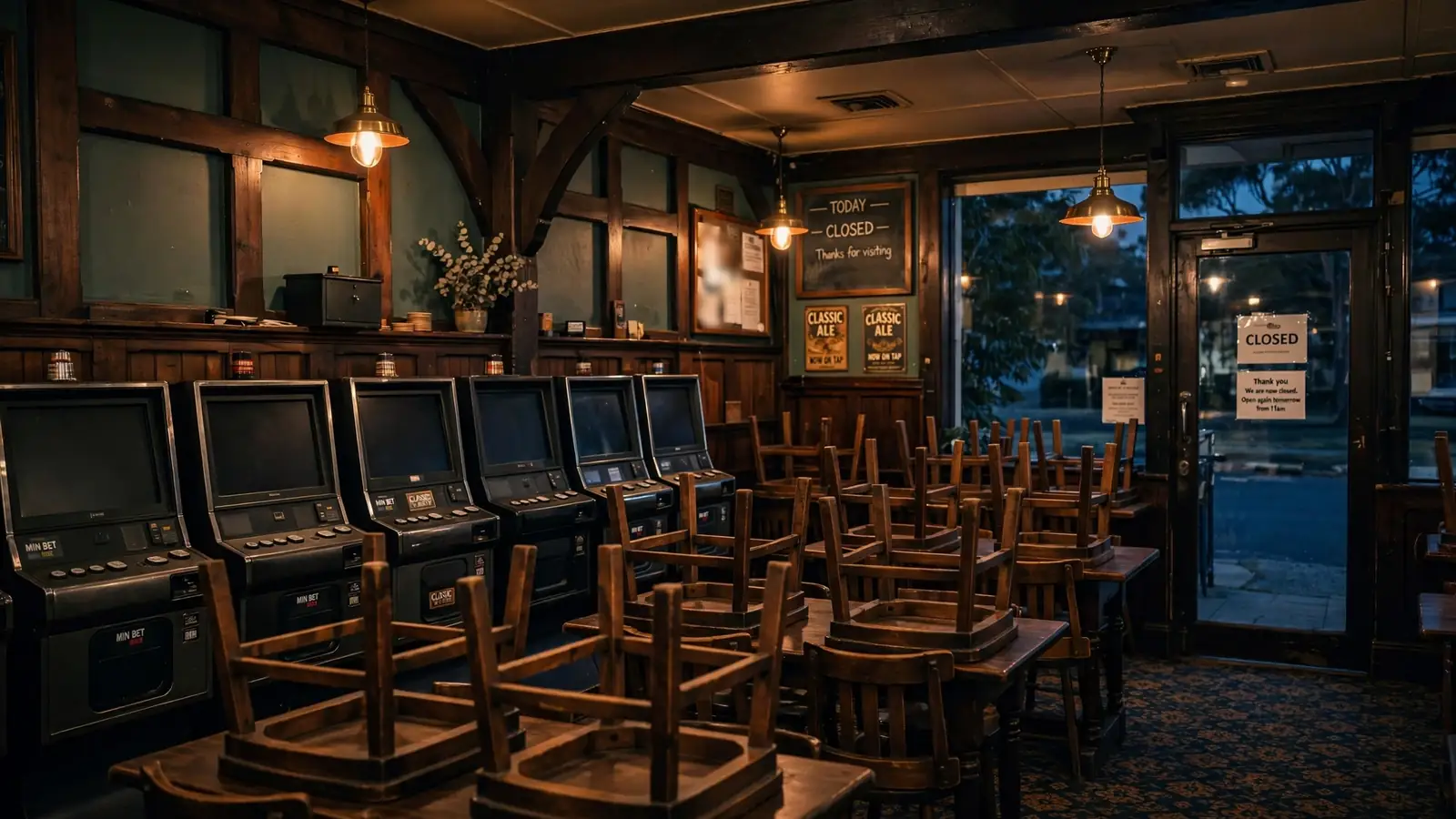
Whether a place in Geelong is open at a particular moment is a question about that venue’s own operating hours. The word “pokies” may bring a familiar room to mind, but it does not establish when the room admits patrons, whether the wider venue is trading, or whether its opening pattern is the same on every day. Those details belong to the venue, not to the machines as a category.
That distinction matters most when the need is immediate. A person checking whether pokies are open in Geelong now is not asking for a general description of local entertainment. They are trying to establish whether a particular door is open at the time they might arrive. Without current hours for an identified venue, the answer cannot responsibly be reduced to a city-wide yes or no. Opening status is local, specific and capable of changing.
Searches for early access make the point neatly. A request for pokies open at six or seven in the morning contains a precise time, but precision in the question does not supply precision in the answer. A venue may have one schedule on weekdays and another on weekends or public holidays; a listed opening time may refer to the premises rather than to every service within them. Those distinctions can affect a journey made before breakfast as surely as they can affect a late visit. The clock does not become a source.
Late opening raises the same issue from the other end of the day. “Open late” is not a standard operating category with one meaning across Geelong. It could refer to a venue staying open beyond ordinary evening hours, or simply to a particular day’s schedule. Without a reliable, current timetable attached to a specific place, neither interpretation settles whether entry is possible at the time in question. A useful check needs to connect the location, the day and the hours—not rely on the broad idea that a venue has pokies.
There is also a small but important difference between a business’s general hours and its access arrangements. A venue may publish hours for its overall operation, yet those hours alone do not necessarily answer every practical question about entry. Hours can be updated, temporary changes can intervene, and the information displayed in one place may not have caught up with the schedule in use. That is not an argument for suspicion; it is a reminder that opening information is a working detail, not a permanent description.
Geelong, like any city, is not one establishment with a single front door and a single timetable. A blanket claim that pokies are open now would imply that every relevant venue shares the same status. A blanket claim that none are open would make the same mistake in reverse. The accurate unit is the individual venue. Until its own hours are established for the relevant day, a broad answer risks turning an uncertain trip into a confident one.
The wording of a request can also conceal two different questions. “Are pokies open?” may mean whether a venue is trading, or whether the area containing the machines is accessible at that moment. Those are related matters, but they are not identical. Knowing that a building is open does not, by itself, settle every detail of access inside it. The sound approach is to treat the venue’s stated hours as the starting point and to confirm any conditions that affect entry before setting out.
This is why a live status indicator, when available, is more useful than an undated directory entry. A current notice from the venue can reflect a temporary closure or a changed schedule; a general listing may simply preserve ordinary hours. Neither format should be mistaken for certainty beyond what it actually says. If the timing is close, checking directly with the venue is more dependable than inferring today’s status from an old listing or from another place’s routine.
The same restraint applies to claims about payout percentages. A venue’s opening time says nothing about the settings of its pokies, and the fact that a room is accessible does not establish a particular return figure. Hours answer a question about access. They do not turn into evidence about what happens after a machine is switched on. That distinction keeps an immediate practical check from being burdened with claims it cannot support.
A visit planned around a particular hour therefore rests on a modest sequence: identify the venue, establish the schedule for the relevant day, and confirm that the information is current enough for the intended arrival. It is less dramatic than a city-wide promise, and more useful. Doors have timetables. Search phrases do not.
Choosing pokies to play in Geelong starts with checking what each operator’s listed details actually tell you. Use these notes as a quick reference, and check the terms that matter to you before signing up.
JustCasino
JustCasino is listed with a Curacao Gaming Control Board licence.
Neospin
Neospin is listed with Curacao Gaming Control Board licence OGL/2023/176/0095, held by Hollycorn N.V.
Thor Casino
Thor Casino is listed with a Curacao licence from Antillephone N.V. (Versus Odds B.V.). Its minimum deposit is EUR 20.
MrPacho
MrPacho lists crypto payouts at 30–120 minutes and fiat payouts at 24–72 hours. Its minimum deposit is A$30.
JeetCity Casino
JeetCity Casino is listed with a Curacao eGaming licence held by Dama N.V.
DragonSlots Casino
DragonSlots Casino is listed with a Curacao Gaming Authority licence held by Jumpman Gaming Ltd.
Uptown Pokies
Uptown Pokies is listed as operating under a Curacao licence since 2017. Its minimum deposit is A$20.
Playfina Casino
Playfina Casino is listed with a Curacao eGaming licence held by Hollycorn N.V. since 2017. Its minimum deposit is A$20–30, depending on the offer.
Ricky Casino
Ricky Casino lists crypto payouts under 1 hour and PayID payouts in 1–3 business days. The minimum deposit is A$20, or A$30 to qualify for the bonus.
WinSpirit Casino
WinSpirit Casino is listed with Curacao eGaming licence OGL/2024/923/0383 from Antillephone N.V. Its minimum deposit is A$30.
“Best” sounds like a settled verdict: a game at the top of a list, supported by a figure that makes the decision simple. For pokies in Geelong, that kind of claim needs more than a familiar name or a bright cabinet. It needs comparable information about the games and the settings in which they operate. Without that, a ranking can be confidently worded and still say very little.
Return to player, or RTP, is one measure often used to compare pokies. It describes the theoretical share of stakes a game returns over a very large number of plays. It does not predict what will happen in a short session, or tell anyone what a particular machine will pay on a particular day. A return figure is a statistical property, not a promise attached to each spin.
There is another complication: a game’s RTP may not be identical wherever it is offered. A specialist review has reported that some providers let casinos select from several RTP settings for the same pokie. So a game title alone may not identify the setting in use. A comparison that names a game but leaves out the relevant configuration can create an impression of precision without establishing that two versions are alike.
The distinction matters when trying to identify the best-paying pokies in Geelong or in the CBD. A meaningful comparison would need reliable information about the games available, their settings and their payout records in the relevant venues. A general RTP figure attached to a game elsewhere cannot, by itself, establish what a local machine is configured to return. Nor does a high theoretical return guarantee a favourable result for any individual player.
The word “best” can also conceal different priorities. One person may mean a higher published RTP; another may mean a game that is easier to understand, has a preferred style, or suits a chosen budget. Those are not interchangeable standards. A list that fails to say what it is measuring turns preference into purported fact.
The mathematics of each spin sets a firm limit on prediction. A pokie uses a random number generator to determine the result, and one spin does not depend on the outcome of the previous one. A run of losses does not make a win due; a recent win does not make another one more likely. The machine carries no memory of a player’s fortunes, however persuasive a pattern may look in the moment.
That independence is easy to lose sight of because people are pattern-making creatures. A sequence of near misses can feel like evidence that a win is approaching; a long pause in play can make the next spin seem somehow charged. Neither impression changes how the next result is generated. The story belongs to the observer, not to the machine.
A fair comparison therefore separates three things: the published characteristics of a game, the setting selected where it is offered, and the unpredictable result of any single spin. Only the first may be visible in general descriptions. The second requires venue-specific confirmation, while the third cannot be forecast from a sequence of past outcomes. Blending them produces rankings that sound useful but answer different questions at once.
This is why claims about the best pokies in Geelong should be read narrowly. A game may be described as popular or associated with a particular return setting, but those labels do not establish that it is the best option across Geelong, that every venue offers the same version, or that it will pay out during a particular visit. No single adjective can do that work.
The same caution applies to searches for Geelong casino pokies or pokies in the city centre. A location in the wording does not supply a comparison of machine settings or payout performance. Venue presence and game quality are separate questions; neither can be inferred from the other.
There is no reliable shortcut from a title to a personal outcome. A ranking is only as useful as its evidence and its definition of “best.” The spin remains random.
The word “online” can make pokies seem detached from the place where they are played. Australian law does not make that distinction disappear. Under the Interactive Gambling Act 2001, providing real-money online pokies to people in Australia is prohibited unless the operator holds a domestic licence. No such licences have been issued, so there is no Australian-licensed online casino.
That boundary matters to searches for online play associated with Geelong as much as anywhere else in the country. A website’s appearance, its claims about being authorised elsewhere, or its willingness to accept Australian customers does not create an Australian licence. The legal restriction falls on the company providing the service. It is not a route to a locally regulated online version of a venue’s pokies.
The position of the person playing is different. The Act targets operators, not individual players; an Australian is not made criminally liable simply for playing on an offshore site that accepts them. That distinction can sound reassuring, but it answers only the question of player liability. It does not make the operator’s service lawful in Australia, nor does it give a player the protections that would come with an Australian-licensed casino. A narrow permission is not a safety net.
The practical risk is clearest when winnings are withheld. If an offshore casino refuses to pay, an Australian player has no legal recourse in Australia against it. There is no domestic online-casino regulator to resolve the dispute on the player’s behalf, because there is no Australian-licensed online casino. The distance between the operator and the player is not merely geographic; it is a distance from Australian remedies.
That matters more than promotional language about “best paying” games or a no-deposit offer. Such claims do not establish that a service is lawful here, or that winnings can be recovered through Australian channels. A bonus may be presented as a gift, but the legal position does not change with the wording of the advertisement. Nor does it change when the games are described as high-limit or suitable for a particular area.
Legal Risk
Providing real-money online pokies to people in Australia is prohibited without a domestic licence. Players using offshore sites have no legal recourse in Australia if winnings are withheld.
BetStop has a similarly specific boundary. It applies to Australian-licensed operators and does not bind offshore sites. Since no Australian online casino holds a licence, registration with BetStop cannot be treated as a block on offshore casino gambling. It is a tool with a defined reach, not a universal switch. That distinction is easy to lose amid the confident language of online gambling.
There is also a basic age threshold: all gambling in Australia, including online pokies, is restricted to people aged eighteen or over. Meeting that threshold does not alter the status of an offshore operator or supply an Australian remedy if a payment dispute arises.
The legal picture, then, is not a simple contrast between permitted local play and forbidden individual behaviour. Companies may not lawfully provide real-money online pokies to people in Australia without a domestic licence; players are not the target of that prohibition. Offshore sites may still accept Australians, but acceptance does not confer local authorisation, and the law offers no Australian route to recover winnings if the site refuses to pay.
That is the boundary. Not a guarantee.
Finding pokies near a particular part of Geelong is a matter of location, not merely of matching words on a map. “Near” can mean a short walk, a direct public-transport trip or a drive from a starting point; those are different tests, and a result that satisfies one may fail another. Without confirmed venue addresses, there is no sound basis for comparing distances or saying which area offers the closest option.
The airport wording makes this especially clear. A search for pokies near Geelong Airport may reflect a wish to find somewhere close to an arrival or departure point, but the phrase alone does not establish that a venue is there, nearby or easy to reach. A map pin can suggest proximity while concealing the practical details: the route, available transport and whether the destination is accessible at the relevant time. Those details need current, specific information rather than an inference from a broad label.
The same applies to the CBD. “Near the city centre” is not a distance measure, and an address described as central does not automatically mean a convenient walk from every point in the business district. For anyone comparing places across Geelong, the useful unit is the journey from a named starting point, not a loose impression of what counts as central.
North Geelong raises a similar problem at a different scale. An area name can help narrow a map, but it cannot confirm that a particular venue with pokies exists there. Nor does a general Geelong result prove that a destination is close to a specific suburb. A location needs to be confirmed first; only then can transport and distance be assessed.
For a practical comparison, a current venue address would need to be checked against a route planner, with the intended mode of travel selected. Walking, driving and public transport can produce very different answers. Routes may also change with the time of day, service disruptions or road conditions, so a static distance is not the same as a reliable journey estimate. This is a simple distinction, though map results often blur it.
The broader Geelong search has the same limit. Results that use the city name may cover a wider area than someone has in mind, while a local-sounding description may not identify a precise address. Without a confirmed destination, transport advice becomes speculation dressed as geography.
That matters because proximity is not just a convenience question. It determines whether a place fits into an existing trip, whether a return journey is manageable and whether the apparent closeness survives contact with the actual route. A search result can point towards an area; it cannot, by itself, settle those questions.
For now, the careful distinction is between wanting pokies close to the airport, the CBD or North Geelong and having a verified location from which to measure that closeness. The first is clear. The second requires an address and current transport information. No shortcut around that.
A venue’s public reputation and its oversight paperwork are different kinds of evidence. A busy room, familiar machines or glowing local recommendations may shape the idea of a “best” pokies venue in Geelong, but none of those impressions shows how a venue responds when gambling begins to cause harm. Records and staffing rules address that less visible work.
A report by regionriverina.com.au describes a requirement taking effect from 1 July: any venue operating more than 20 gaming machines must have a dedicated responsible gambling officer (RGO) on duty while those machines are running. The threshold matters. It does not describe every venue, and it is not a rating of the machines or the place. It makes a named staff role part of oversight at venues above that machine count.
The same report says venues have a one-month grace period to remove signage and introduce responsible gambling officers. The transition is telling: regulation reaches beyond the room’s formal procedures to the cues placed around it. Signs can direct attention, shape movement and make gambling feel like one more ordinary stop in a social outing. Their removal is a small administrative act with a larger point: the environment itself is part of how gambling is managed.
There is another record to keep. Venues are also to maintain a gambling incident register, documenting occurrences that include a patron showing behaviour suggesting they may be at risk of, or affected by, gambling harm. The register turns an observation into something that can be recorded rather than forgotten at the end of a shift. It does not make a private difficulty simple, or reduce a person to an entry. Its value is that a concern can leave a trace within the venue’s own oversight.
Paperwork is not proof of a flawless response. A register can show that an incident was noted; by itself, it cannot tell the whole story of what followed. Nor does the presence of an RGO reveal what a particular venue’s machines are like, how patrons experience the room, or whether one venue deserves to be called the best. Those are separate questions, and a title cannot answer them.
This is why venue-level rankings need more than a shortlist of names. A meaningful account would need dependable information about each place and a clear basis for comparison. Oversight requirements instead describe responsibilities attached to certain operating conditions. They offer a way to understand the machinery of care around pokies, not a league table of Geelong venues.
Responsible Gambling Oversight
Venues with more than 20 gaming machines are required to have a dedicated responsible gambling officer (RGO) on duty and maintain a gambling incident register.
The distinction may seem unglamorous beside the promise of a favourite machine or a lively night out. Yet the register, the staff role and the signage rules mark a shift in what a venue is expected to notice. Not just play, but signs of harm.
A venue’s doors being open does not necessarily mean its pokies are operating. Food service, bar access and other facilities may follow different schedules from the gaming area; a late opening time alone cannot establish that machines are available throughout the night. “Open” and “pokies operating” describe separate things.
That distinction matters when “24-hour pokies” is taken literally. A venue may remain accessible while its gaming area is closed, or its machines may operate only during part of the venue’s opening period. The wording on a listing can blur those arrangements, so it should not be treated as proof of continuous machine access.
There is also a staffing condition behind machine operation at larger venues. A report by regionriverina.com.au describes a requirement applying from 1 July: venues with more than 20 gaming machines are to have a dedicated responsible gambling officer (RGO) present while those machines are running. The condition is tied to operating machines, not simply to whether the venue itself is open. A quiet building and an active gaming floor are not interchangeable states.
That rule does not establish the hours of any Geelong venue. Nor does the phrase “24-hour” tell whether a particular gaming room is open, whether its machines are switched on, or whether the venue’s schedule has changed. Those details are venue-specific. A general directory entry can be useful for orientation, but it is not a live confirmation of machine availability.
The wording also carries a small cultural assumption: that a place which admits people at any hour must offer every part of its business at any hour. Hospitality rarely works so neatly. Kitchens close, services pause and rooms can have their own operating arrangements. Pokies are no exception.
For Geelong, the sensible distinction is therefore between a venue’s opening hours and its pokies hours. Without current, venue-specific confirmation, neither a “24-hour” label nor a general statement that a venue is open now demonstrates that machines are operating. The label is not the floor plan.
Crown, Geelong and pokies can appear together in a search phrase without describing a confirmed local venue. The words might reflect an assumption, a hoped-for destination or a request to compare places. Their proximity on a screen does not establish that Crown operates a casino in Geelong, or that pokies associated with Crown are available there.
That distinction matters because a familiar name can lend an uncertain claim an air of certainty. A reader may see Crown beside Geelong and infer a local address, then assume that the venue has a pokies room. Neither conclusion follows from the wording alone. A place name is not a venue listing; a venue name is not proof of a machine floor.
The same caution applies to the idea of a “best” pokies room at Crown in Geelong. That phrase presumes both a local room and a basis for ranking it. Without an established venue to identify, the comparison has nowhere to land. It would be misleading to turn the wording into a recommendation or to describe particular machines as if they were present.
Attention The presence of a brand name like Crown in a search phrase does not confirm the existence of a local venue, a pokies room, or specific payout limits in Geelong.
A maximum cash payout is narrower still. It is not a general property of a location’s name: it would need to relate to an identifiable machine and the conditions governing its prize. A large-sounding label does not make the underlying detail real.
This is a small example of how place names travel. Casino brands can be discussed far beyond the sites with which they are actually associated, while search systems place nearby terms together because people often want those things connected. The resulting phrase may look like a directory entry, even when it is only a bundle of words. That is an efficient way to produce uncertainty.
The sensible reading is modest: Crown is part of the wording, and Geelong is part of the wording. The combination does not establish a Crown casino, a Crown pokies room, or a local maximum payout. Nor does it identify a “best” room. Those are separate claims, each requiring its own substantiation. Until then, treating the phrase as a confirmed destination would mistake association for fact.
A name is not an address.
A club in central Geelong may sound like a straightforward answer to a question about pokies: a familiar kind of venue, in a familiar part of town, with entertainment under one roof. But the category does not establish what is available inside any particular building. A club’s name, location or social role cannot by itself show whether it has pokies.
That distinction matters when “best” is attached to a CBD venue. The word suggests a comparison, yet a meaningful comparison would need more than a central address. It would require reliable details about the machines and their settings, as well as a basis for comparing venues. Without that, a list of clubs would turn a plausible local picture into an asserted fact.
The civic life around clubs is worth noticing. In Australian towns and cities, clubs have often served as social institutions as much as places of recreation; their rooms can host meals, events and community gatherings. The word therefore carries cultural weight. It does not, however, function as a directory entry for gambling facilities. A club may fit the image in someone’s mind and still not answer the practical question.
CBD presence is another separate matter. “Central Geelong” can be used loosely in everyday conversation, while a venue’s precise location is a matter of address, not impression. Even if a club is described as central, that says nothing about whether pokies are on site. The location and the facility are two different claims.
For someone looking for self-exclusion options in Geelong, the relevant distinction is between a local venue’s arrangements and a broader tool that applies only within its scope. BetStop applies to Australian-licensed operators; it does not bind offshore sites. It is not a directory of Geelong clubs, nor does its existence establish that any particular CBD club has pokies. Venue-level information and personal exclusion measures should not be treated as interchangeable.
A careful account of clubs with pokies in the Geelong CBD would therefore begin with confirmation of both parts: that a venue is a club and that pokies are actually available there. Until those details are established, the fair description is not a shortlist but an unresolved local detail. The city’s social geography may make the question natural. It cannot supply the answer on its own.
Parkes is the part of the wording that needs interpretation before it can point to anything useful. Paired with Geelong, it could be intended as a place within the wider area, a venue name, or something else entirely. The words alone do not settle which meaning applies. Treating them as a confirmed address would turn an ambiguity into a claim.
That matters because a place name and a venue name do different work. A locality can narrow a search to an area; a venue name identifies a particular business. Neither, by itself, confirms that pokies are available there. The phrase “pokies in Parkes, Geelong” may express a location the person has in mind, but it cannot establish that a relevant venue exists at that location.
The same care applies to “best pokies in Geelong”. “Best” might refer to a particular machine, a nearby place to play, or simply a broad local recommendation. Adding Parkes does not resolve that uncertainty unless the intended place is independently identified. A confident-sounding result can still rest on a mistaken reading of the name.
This is not a matter of splitting hairs. Local names are often shared by streets, districts, businesses and people, while a short phrase leaves out the context that would distinguish them. In a small search box, those distinctions disappear neatly. In real life, they do not.
A useful way to read the wording is as an unfinished location description, not as proof of a Geelong venue in Parkes. The place reference needs confirmation before any claim about a venue can follow. Until then, the responsible answer is narrower than the wording may suggest: the name is ambiguous, and no particular pokies venue can be identified from it alone.
Names travel. Evidence does not.
“Cashless” can describe a way of funding play at a venue, but the label alone does not explain how a system works. It might refer to a venue-based process for accessing funds at machines without handling notes or coins. Whether a particular system is available, what it allows, and how it is managed are matters of local venue detail—not conclusions that can be drawn from the phrase itself.
That distinction matters for anyone weighing cashless pokies in Geelong. A payment method used for online transactions is not automatically a way to fund a physical machine. PayID, for instance, is a transfer alias within Australia’s New Payments Platform: payments can be directed using an email address, mobile number or ABN. In an online setting, using PayID for real-money play would require it to be linked to a bank account. None of that establishes that a Geelong venue accepts PayID at a pokie, or offers cashless machine play at all.
The machinery of payment and the machinery of gambling are separate arrangements. One concerns moving money between accounts; the other concerns how a venue’s machines are accessed and funded. Treating them as interchangeable turns a familiar payment name into a claim about a venue that it cannot support.
The same care applies to phrases joining Newcastle and Geelong. A combined place-name phrase does not show that a particular cashless option operates in either city, nor does it provide a meaningful basis for calling one location’s pokies “best”. A feature can only be compared once its presence and terms are established for the venues being compared.
For a local decision, the useful detail is concrete: whether the venue offers a cashless system, how it works, and what restrictions apply. A payment logo, a general description of PayID, or a city name in a listing cannot answer those questions. The distinction is less glamorous than a ranking. It is also the point.
Yes, Australians can play on offshore sites that accept them, but no Australian-licensed online casino exists. The law targets operators offering real-money online pokies without a domestic licence, and players have no legal recourse in Australia if an offshore casino refuses to pay.
Yes, PayID is treated like any other qualifying deposit method at the recommended sites.
Yes. Some game providers let casinos choose from multiple RTP settings for the same game, so its return percentage can differ between casinos.