The term “parlour” does not establish a casino licence or show that a website is an authorised online service.
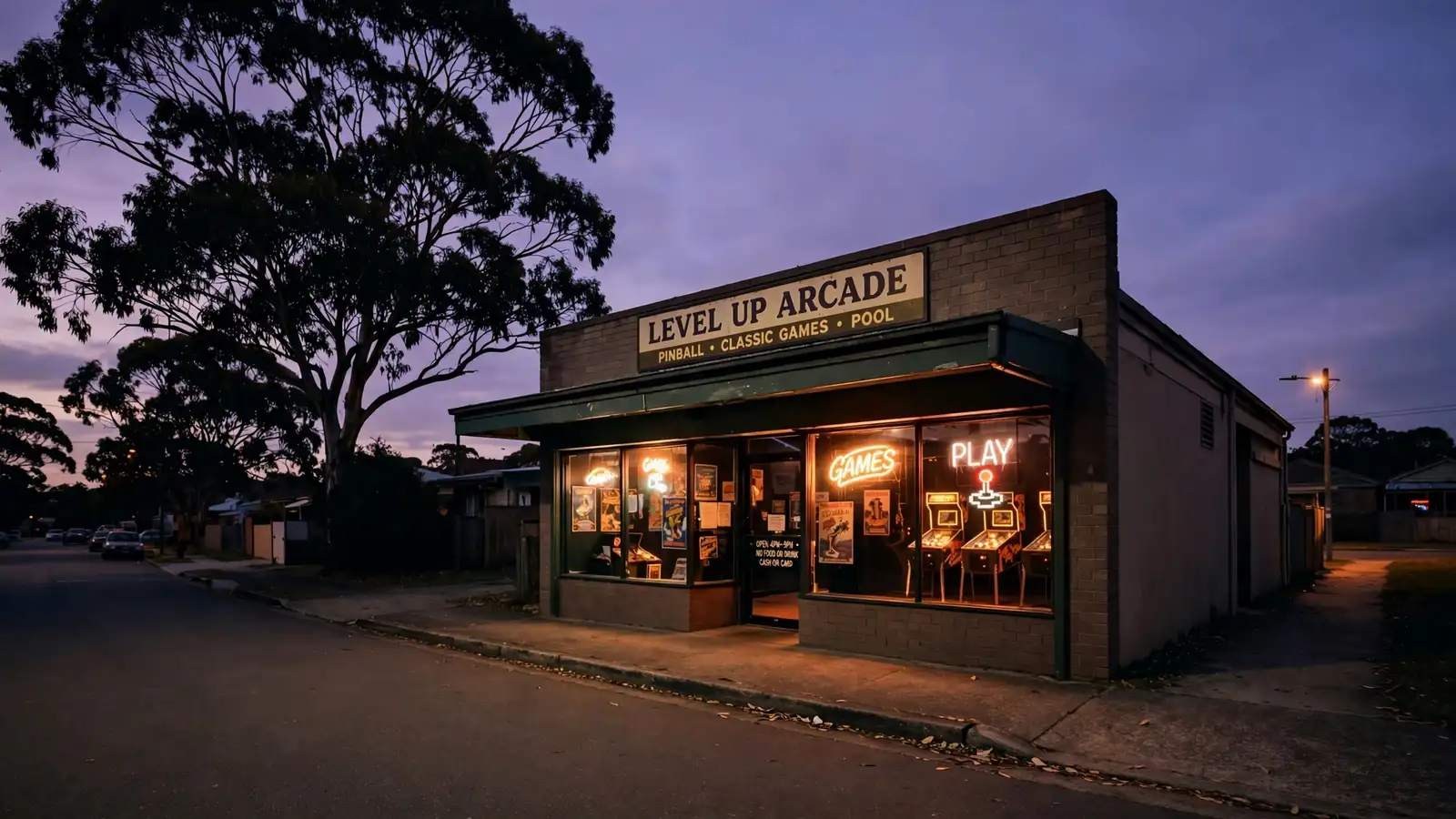
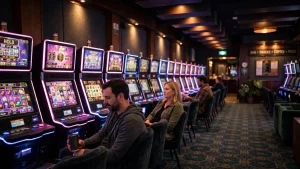
“Parlour” can suggest a room set aside for a particular pastime: a word with the air of a local institution, rather than a description of a digital service. In Australian gambling language, “pokies parlour” may be used to evoke a physical place where gaming is part of the venue’s business. But the phrase itself does not establish what kind of place is being described, who operates it or whether it holds a casino licence.
That distinction matters because Australian gaming venues sit within a system organised by state and territory. Each casino property operates under a licence issued by the jurisdiction in which it is located. The licence attaches to a particular property and its regulated operation; it is not conferred by a name, a logo or the use of the word “casino” in promotional copy. “Parlour casino” may sound like a recognised category, but the wording alone cannot prove that a venue belongs to one.
A physical casino is a place with an address, a local jurisdiction and a licence. A website can borrow the same vocabulary without sharing those characteristics. The two may appear side by side in a search result or on a page that uses Australian references, yet they remain different things. One is a venue subject to a local licensing framework; the other is an online service whose wording may simply be designed to sound familiar.
The word “pokies” carries a recognisably Australian tone. It belongs to everyday shorthand, the kind that can make a formal industry sound like a neighbourhood custom. That informality should not be mistaken for evidence about a business. A site describing itself as a parlour, or using the language of a local gaming room, has not thereby become a physical venue. Nor does an Australian-sounding name show that an online service has a local casino licence.
There is a social history tucked into this vocabulary. “Parlour” suggests sociability and a shared room; “casino” suggests a more formal institution. In practice, language can blur the boundary between a modest-sounding entertainment setting and a large licensed property. The label may tell something about the image a business wants to present. It does not, by itself, tell what legal or practical arrangement stands behind that image.
A specialist review describes Australia as having more than 20 full-scale casinos across all eight states. That is a count attached to a particular kind of review, not a permanent definition of the market: venues and classifications can change. Its useful point here is scale. A national landscape of licensed properties is not the same thing as every business—or website—that adopts casino language. A phrase broad enough to travel across the country is not a substitute for the local licence governing an actual property.
This is why a search for a pokies parlour casino in Australia can lead to more than one kind of result. It may point towards a physical casino, a gaming venue using familiar terminology, or an online operation presenting itself in similar terms. Those results can share words while differing in location, oversight and what they actually offer. The resemblance is linguistic, not proof of equivalence.
The online context carries a separate legal boundary. Under the Interactive Gambling Act 2001, operators may not provide real-money online casino games to people physically in Australia. That means the appearance of casino language on a website should not be read as evidence that the service is a lawful Australian online casino. A local tone is not a local licence. A familiar phrase is not a regulatory status.
This does not turn every use of “parlour” into a warning sign. The word can describe a place, serve as a business label or appear as part of an online identity. The point is narrower: language alone cannot settle which of those meanings applies. For a physical venue, the relevant distinction is its actual location and the licence issued by its state or territory. For an online service, the use of the same vocabulary does not make it a licensed Australian casino.
The phrase, then, is best treated as a description to interpret, not a promise to rely on. It may conjure a room, a local habit or a casino brand. Only the first of those is a place—and only the relevant jurisdiction can establish the status of a licensed property. The word does less work than it seems.
Attention: The use of Australian-sounding terminology like "pokies parlour" by an online service does not evidence that the venue holds a local casino licence.
A sign-up bonus can sound like a welcome; a deposit bonus can make a payment seem to unlock extra play; a no-deposit offer can imply that money need not change hands first. These phrases belong to the language of promotion. They do not establish that an online casino service is lawful for people in Australia, or that an offer is legally available here.
The governing distinction is not between one bonus format and another. The Interactive Gambling Act 2001 makes it illegal for operators to provide real-money online casino games to people physically located in Australia. Casino-style services covered by the prohibition include slots, poker and table games. A promotional label does not alter the nature of the service attached to it. Calling an inducement a sign-up reward, a deposit extra or a no-deposit bonus cannot turn a prohibited online casino service into a permitted one.
That matters because bonus language often presents itself as a separate, harmless layer: a welcome before play, a reward for registering, or an incentive that supposedly costs nothing. Yet the offer is part of the service’s commercial pitch. Where the underlying product is prohibited for Australian customers, the promise attached to it does not create a lawful exception. The absence of an initial payment is not a regulatory test.
The federal framework also reaches advertising. Promoting prohibited online gambling services to people in Australia is not made acceptable by describing an offer as introductory or by placing its conditions in small print. The Interactive Gambling Act draws the boundary around the service and its promotion, not around the vocabulary chosen by a marketer. A bonus headline may be designed to feel like a minor benefit; legally, it remains connected to the service being advertised.
This is one reason apparently generous wording should be read as a claim made by a promoter, not as proof of permission. A brand may describe itself as a casino, label a reward “no deposit,” or present registration as the first step toward a bonus. None of those phrases supplies an Australian authorisation for real-money online casino games. The offer’s polished language cannot do the work of a regulatory framework.
Enforcement sits with the Australian Communications and Media Authority, the federal body responsible for administering the Interactive Gambling Act and monitoring compliance with federal interactive gambling laws. ACMA can investigate and take action when an operator provides or advertises prohibited online gambling services. Its role is not to certify a bonus as fair because its wording is clear, nor to make a prohibited service permissible because an offer appears limited or conditional.
One enforcement measure is website blocking. ACMA can ask Australian internet service providers to block access to sites that provide prohibited interactive gambling services or advertise them in Australia. Since enforcement action began in November 2019, the authority has blocked more than 1,455 illegal gambling and affiliate websites. That figure describes action against a broad set of sites; it is not a count of bonus offers, nor a measure of how many promotions were lawful.
Withdrawal figures have been reported inconsistently. One account puts the number of illegal services that have left the Australian market since 2017 at more than 210; another gives the figure as over 190. Both describe withdrawals since ACMA began enforcing the rules, but the totals differ. What the figures do show, without resolving the total, is that enforcement has been associated with services leaving the market.
Legal Prohibition
Under the Interactive Gambling Act 2001, it is illegal for operators to provide real-money online casino games to people physically located in Australia.
The distinction between an offer’s wording and its legal status is therefore more than a matter of careful reading. Bonus language is built to emphasise a benefit and soften the commercial character of a service. Federal law looks instead at what the service provides and whether it is prohibited for customers in Australia. A “no-deposit” label is not a loophole; “sign-up” is not an exemption; a deposit incentive does not move the service outside the Act.
In a market where online casino services of this kind are prohibited, promotional terminology cannot serve as a substitute for legal status. It can describe what an operator claims to offer. It cannot make that offer lawful. Plain enough.
A page can load, display a polished lobby and accept account details. Those are facts about the page’s operation, not proof that it is authorised to provide online casino games in Australia. The distinction is easy to lose because the internet presents access as a simple event: a screen appears, buttons respond, and the service seems present. Regulation asks a different question.
For someone looking for a way to play pokies online under a parlour or casino label, the words on a page can create an impression of continuity with a physical venue. Yet a venue and a website are not interchangeable simply because they share a name or style. Australian casino properties hold licences issued by their state or territory. That local licensing framework does not turn an online service into a licensed Australian casino.
The Interactive Gambling Act 2001 prohibits operators from providing real-money online casino games to people in Australia. A site’s ability to accept account traffic does not alter that position. Nor does a working login, a familiar visual design or a page that describes itself as available to Australian customers. Functionality is not authorisation. It is only functionality.
That distinction matters even where a page advertises a free way to play. “Free” describes a claim about the terms or nature of an activity; it does not settle who provides the service or whether the service may legally be offered here. The phrase can appear reassuring because it seems to remove money from the picture. But a label cannot determine the regulatory status of the underlying service, and the presence of a playable interface cannot supply that missing authority.
There is a broader habit at work. Digital services encourage people to treat availability as a verdict: if a page opens, the service must belong in the ordinary marketplace. In practice, access and permission are separate matters. A working address says that a particular route to a page is functioning at that moment. It does not establish the operator’s standing under Australian law, and it does not convert a prohibited online casino service into a lawful one.
The distinction is especially important when the same brand language is used across physical and online settings. “Parlour” may suggest a room, a local venue or a familiar kind of entertainment. On a website, it can be no more than marketing language. A name may borrow the atmosphere of a bricks-and-mortar gaming venue without carrying that venue’s local licence or legal status. The resemblance is rhetorical, not regulatory.
Functionality, such as a working login or a polished visual design, is not equivalent to regulatory authorisation under Australian law.
A search for online play can therefore lead to material that looks complete while leaving the central question unanswered. A site may present rules, account controls and games in a coherent package; that presentation remains a claim made by the service. Neither the apparent completeness of the page nor its continued availability is evidence of an Australian licence. The browser records what it can reach. It does not certify what the operator may provide.
This is not a technical quibble. It marks the boundary between a network connection and a lawful service. Australian law places responsibility on operators offering prohibited interactive gambling, while the ordinary signs of a functioning website remain just that: signs of a functioning website. A web address can be live and still tell nothing decisive about whether its casino offer has lawful standing here.
The screen may look settled. The question is not.
A free-chip or free-spin claim can make a website appear to offer something unusually generous before it has established what the service is, who operates it, or whether its address is stable. The language is designed to catch attention; it is not a credential. A free label does not turn a promotion into proof of a legitimate Australian casino service.
Addresses are part of this story. When authorities seek to restrict access to prohibited gambling services, a domain may stop resolving through Australian internet providers. That is a technical consequence of blocking, not a verdict delivered by the browser. A page that fails to load may have been affected by a block, but the failure alone does not identify the reason. A page that loads is no more conclusive: accessibility does not establish Australian regulatory status.
A specialist gambling-industry review has reported that the Australian Communications and Media Authority has taken blocking action against illegal gambling services, including alternate domains associated with Fair Go. The significance is not the brand’s promotional vocabulary. It is the enforcement mechanism: ACMA can seek website blocking, and a blocked address can be followed by another address appearing later. The domain may change while the underlying claim remains the same.
That shifting surface can give an offer the appearance of persistence. A new web address, a revised landing page or a fresh invitation to claim free spins may look like evidence that a service has returned in a new form. It is only evidence that the address or page has changed. It does not show that the operator has acquired a lawful basis to provide online casino games to people in Australia, or that the promotion is officially recognised.
The distinction matters because promotions trade on immediacy. A bright button suggests that the only remaining task is to accept the gift. But the word “free” answers none of the important questions about the service behind it. Nor does it explain why an address has changed, whether an earlier domain was blocked, or whether the new page belongs to the same operator. The offer is the claim. The address is the route to the claim. Neither is independent evidence of status.
Caution: A change in web address or the appearance of a new domain does not indicate that an operator has acquired a lawful basis to provide online casino games in Australia.
Blocking also complicates the simple habit of treating a working page as a trustworthy page. Australian internet providers may be required to restrict access to specified domains, while alternate addresses can appear over time. Specialist coverage describes this as a changing web environment, not a dependable register of approved services. A domain may resolve today and fail tomorrow; that movement says more about access and enforcement than about the merits of a bonus.
The same caution applies when a free-chip promotion is repeated on another page or under a different address. Repetition is not verification. A marketing phrase can travel easily; regulatory standing cannot be inferred from its circulation. A site’s current availability, its visual polish and the persistence of its promotional copy remain separate from the question of whether its service is permitted in Australia.
A changing address is not a clean slate. Nor is a free offer proof.
Choosing an online pokies casino involves more than finding games: licensing and practical details can help you decide what to check before signing up. This list highlights the information available for each operator so you can assess which details matter to you.
JustCasino
JustCasino lists a Curacao Gaming Control Board license.
Neospin
Neospin lists a Curacao Gaming Control Board license, numbered OGL/2023/176/0095, held by Hollycorn N.V.
Thor Casino
Thor Casino lists a Curacao license through Antillephone N.V. (Versus Odds B.V.). Its minimum deposit is EUR 20.
MrPacho
MrPacho lists crypto payouts at 30–120 minutes and fiat payouts at 24–72 hours. Its minimum deposit is A$30.
JeetCity Casino
JeetCity Casino lists a Curacao eGaming license held by Dama N.V.
DragonSlots Casino
DragonSlots Casino lists a Curacao Gaming Authority license held by Jumpman Gaming Ltd.
Uptown Pokies
Uptown Pokies lists a Curacao license and says it has operated since 2017. Its minimum deposit is A$20.
Playfina Casino
Playfina Casino lists a Curacao eGaming license held by Hollycorn N.V. and has operated since 2017. The minimum deposit is A$20–30, depending on the offer.
Ricky Casino
Ricky Casino lists crypto payouts in under an hour and PayID payouts in 1–3 business days. Its minimum deposit is A$20, or A$30 to qualify for the bonus.
WinSpirit Casino
WinSpirit Casino lists a Curacao eGaming license, OGL/2024/923/0383, through Antillephone N.V. Its minimum deposit is A$30.
A review can sound authoritative while leaving its central subject indistinct. “Parlour” may describe a physical gaming venue, appear in a business’s promotional language, or simply lend a familiar local flavour to a website’s branding. Those are not interchangeable meanings. Before weighing a review’s praise or criticism, it helps to establish what, exactly, is being reviewed.
For a physical casino, the useful starting point is the property and the jurisdiction where it operates. Australia’s casino industry is regulated by state and territory governments, and each property holds a licence from its local jurisdiction. A review that identifies the venue, its location and the relevant licensing authority gives the claim a framework that can be checked. One that relies only on phrases such as “trusted parlour” or “official casino” has supplied atmosphere, not evidence.
That distinction matters because a review is not a licence. Nor is a polished description, a familiar Australian expression or a photograph of gaming-room interiors proof that the service being discussed is the licensed property itself. Marketing language can borrow the vocabulary of a brick-and-mortar venue without establishing any connection to one. The words may be locally dressed; the underlying claim still needs to be specific.
A careful reading separates observation from assertion. Statements about a venue’s setting or facilities should be tied to an identifiable place. Claims about its status should name the jurisdiction and point to the authority responsible for oversight, rather than treating “licensed” as a decorative adjective. If the review slides between a physical venue and an online brand without explaining the relationship, that is not a minor editorial shortcut. It changes the subject midway through the sentence.
The same restraint applies to tone. A reviewer may call a place welcoming, lively or well run; those are judgments, shaped by the reviewer’s priorities and experience. They can be useful, but they are not the same kind of information as a property name or a licensing detail. A strong account makes the boundary visible instead of passing opinion off as official standing. A confident voice is not a credential.
Readers can also notice what a review does not distinguish. Does it describe a real venue, or repeat wording taken from a site’s own promotional copy? Does it identify the responsible jurisdiction, or use “Australian” as a broad reassurance? Does it explain which entity the description refers to? These are questions of evidence, not suspicion for its own sake. The purpose is not to dismiss every favourable account, but to see whether its confidence rests on details that can be independently understood.
A review of a parlour casino, then, is best treated as a set of claims with different weights. Personal impressions may help convey atmosphere; licensing language calls for precision. Where the two are blended together, the reader is left to do the separating. That is a poor substitute for clear writing—and a revealing one.
A map of Australian casino venues is not the same thing as a map of every place where gambling occurs. One specialist gambling review counts gambling activity across 147 Australian cities, a figure that describes the reach of the activity rather than a catalogue of casino destinations. The distinction matters: a city may appear in a broad count of gambling locations without being known for a full-scale casino, and the word “parlour” does not settle what kind of place is meant.
The same review identifies Sydney, New South Wales, as the country’s largest gambling city, counting 11 gambling facilities there. That is a useful snapshot, not a permanent civic classification. Facilities open, close and change their role; a city label can compress those differences into a single number. Sydney’s place in the national picture is therefore best read as a claim about a particular count, not a timeless rank.
Distance alters the meaning of the map. In a large country, a venue’s state or territory is not a minor detail added after its name. It locates the property within a different jurisdiction and a different regional landscape. Alice Springs, for instance, sits far inland in the Northern Territory, while the Gold Coast venue named Jupiters Gold Coast Casino & Hotel is on Broadbeach Island. The names point to very different settings; neither is a generic “Australian parlour.”
A specialist gambling review counts three casinos across three cities in the Northern Territory. In that same account, Alice Springs is the territory’s city with the most casinos: one. The phrasing sounds almost comically modest, but it captures a real feature of thinly populated regions: a city can lead a local count without hosting a cluster. The count should remain attached to the review that made it, since geographic inventories are snapshots and their categories may not match one another.
The named addresses make the broad map more tangible. Lasseters Casino is at 93 Barrett Drive in Alice Springs, Northern Territory. Jupiters Gold Coast Casino & Hotel is located on Broadbeach Island, on the Gold Coast. Country Club Casino is listed on Country Club Avenue in Prospect, within Meander Valley. These locations span an inland Northern Territory city, a Queensland coastal destination and a Tasmanian locality. They are not interchangeable stops on a single urban circuit.
The contrast between a city count and a venue address is worth keeping. Counts suggest concentration; addresses show where a particular property actually sits. A search phrase may blur casino, gaming venue and parlour into one loose image, but Australian geography resists that flattening. Sydney’s facilities belong to a metropolitan setting, while a casino in Alice Springs belongs to a different scale of place and distance. The same word does not make the journey, or the local context, the same.
A map can orient. It cannot turn a location count into a recommendation, nor make a review’s snapshot a settled national census. These are places first, and numbers with a source attached.
Located at 93 Barrett Drive in Alice Springs, Northern Territory.
Located on Broadbeach Island, on the Gold Coast, Queensland.
Located on Country Club Avenue in Prospect, within Meander Valley, Tasmania.
A promise of a bonus may be the first thing visible in casino language, but it does not define who can enter a physical venue. In Australia, the minimum age for casino entry is 18 nationwide. The threshold is a condition of access, not a promotional term that can be softened, waived or rewritten by an offer.
That distinction matters because casino marketing often makes access sound like a matter of timing: a welcome, a special occasion, a reason to arrive. Age works differently. It is an entry boundary set across the country, not a benefit attached to a particular parlour or a condition that changes with the wording on a sign. A bonus can describe a promotion; it cannot make an underage visitor eligible to enter.
At major Australian casinos, valid photo identification is required for entry. The practical effect is plain: appearance, confidence or an adult companion does not substitute for identification. Venues have to establish who is crossing the threshold, and age is part of that check. The rule may seem ordinary precisely because it is so widely understood, but it marks a deliberate distinction between gaming spaces and other forms of public entertainment.
There is a social history in that ordinary procedure. Casinos present themselves as leisure venues, with dining, performance and hospitality around the gaming floor. Yet the entertainment setting does not dissolve the boundary. The law treats casino access as something that must be controlled, even where a venue contains activities beyond gambling. A bright foyer remains a controlled entrance.
Bonus language can blur the difference between being invited and being entitled to enter. An advertisement may make a venue sound open, welcoming or occasion-driven; none of those impressions changes the age requirement. Nor does a promotion create a separate route through the door. Eligibility comes first. The offer, if one is being described, sits somewhere else in the hierarchy.
This is a narrow point, but a useful one. Physical casino entry in Australia has a clear national age floor, and major venues require photo identification. Promotional language cannot displace either fact. The boundary is less glamorous than the bonus. It is also the part that decides whether the door opens.
“VIP” can make a parlour sound like a separate world, governed by invitations and private routines. The word alone establishes none of that. It may be promotional framing, a label attached to a page, or a suggestion of status; without stated, verifiable terms, it says little about who may enter or what access involves.
The more concrete feature of major Australian casinos is their operating rhythm: they run around the clock. That does not make every visit a special occasion, nor does it imply that a VIP label changes the venue’s ordinary schedule. It describes continuous casino operations, not a promise of reserved treatment, dedicated services or a particular experience.
There is a small social history in the language. Casinos borrow the vocabulary of clubs and hospitality, where status has long been used to make access feel scarce and therefore valuable. Yet the practical question remains less theatrical: what is the venue, and what does it actually state about entry? A grand label cannot answer on its own.
A 24-hour operation also belongs to the city’s wider timetable. It does not mean that every visitor arrives at the same hour, or that the atmosphere stays unchanged through the day and night. It means the casino is not defined by a single evening opening. The clock keeps going.
Major Australian casinos typically operate around the clock, providing continuous casino operations regardless of VIP status.
For anyone encountering a “VIP parlour” description, the useful distinction is between a venue’s operating fact and language designed to suggest exclusivity. The former can be checked against the venue’s own information; the latter needs specific terms before it carries practical meaning. A label is not a pass.
The language of a “parlour” can make casino gaming machines sound like a separate, small-scale category. In Australia, though, the relevant distinction is not the room’s name but the venue and the licence governing it. Casino properties are regulated by their state or territory, and their approved machine numbers sit within that local framework.
Across Australian casinos, 3,308 gaming machines are both endorsed on venue licences and installed. That figure describes a defined part of the licensed casino estate: machines physically present under the terms of venue licences. It is not a count of every machine in every kind of gaming venue, nor does it measure how many are available at a particular property at a particular moment.
The distinction matters because “parlour pokies” may suggest a dedicated room, a particular style of venue or simply a familiar name for casino machines. The count cannot settle which meaning is intended. It records licensed and installed equipment, not the language used on a sign or website.
There is something revealing in the administrative phrasing. A machine must be authorised on a venue’s licence and installed before it enters this count; the number therefore describes regulation as well as physical scale. The licence is not decoration. It is the boundary between a casino’s approved operations and a loose promotional label.
Nor does the national total turn into a catalogue of attractions. It offers no basis for comparing individual machines, their features or their popularity. Those are different claims, and the aggregate number does not support them. The figure is best read as a measure of the scale of licensed casino machine provision in Australia, not as an invitation to play.
A parlour is a setting; a licence is a legal instrument. Confusing the two gives a cosy word more authority than it has earned.
The phrase “real-money” can make an online casino service sound like a settled product: a place, a payment method and a promise of play. In Australia, that wording does not describe a lawful online casino offer. The Interactive Gambling Act 2001 prohibits operators from providing real-money casino games to people in the country. A new web address changes the route to a service, not the legal character of what it offers.
That distinction matters because domains can multiply after enforcement. A service may reappear under an alternate address, while promotional pages repeat claims about access or payments. Neither the language nor the address supplies evidence of Australian authorisation. There is no Australian licence for an online casino to point to as proof that such real-money play is permitted.
The Australian Communications and Media Authority is responsible for enforcing the federal rules. It can ask internet service providers to block websites that offer prohibited interactive gambling services or advertise them. ACMA has taken blocking action involving illegal gambling services, including alternate domains connected with Fair Go. The point is not that every unfamiliar address has the same history; it is that a substitute domain should not be mistaken for a change in status.
Blocking also makes the public record less tidy than marketing language suggests. An address may stop resolving through Australian providers, and another may later appear. That sequence records access and enforcement, not a licensing process. The distinction is plain, even when the web makes it look otherwise.
For a real-money claim aimed at Australians, the relevant question is not whether the domain has changed or the page still loads. It is whether the underlying service is one the law permits operators to provide. For online casino games, the federal prohibition remains the governing line. A new doorway is still the same doorway.